 services@aitchsoft.com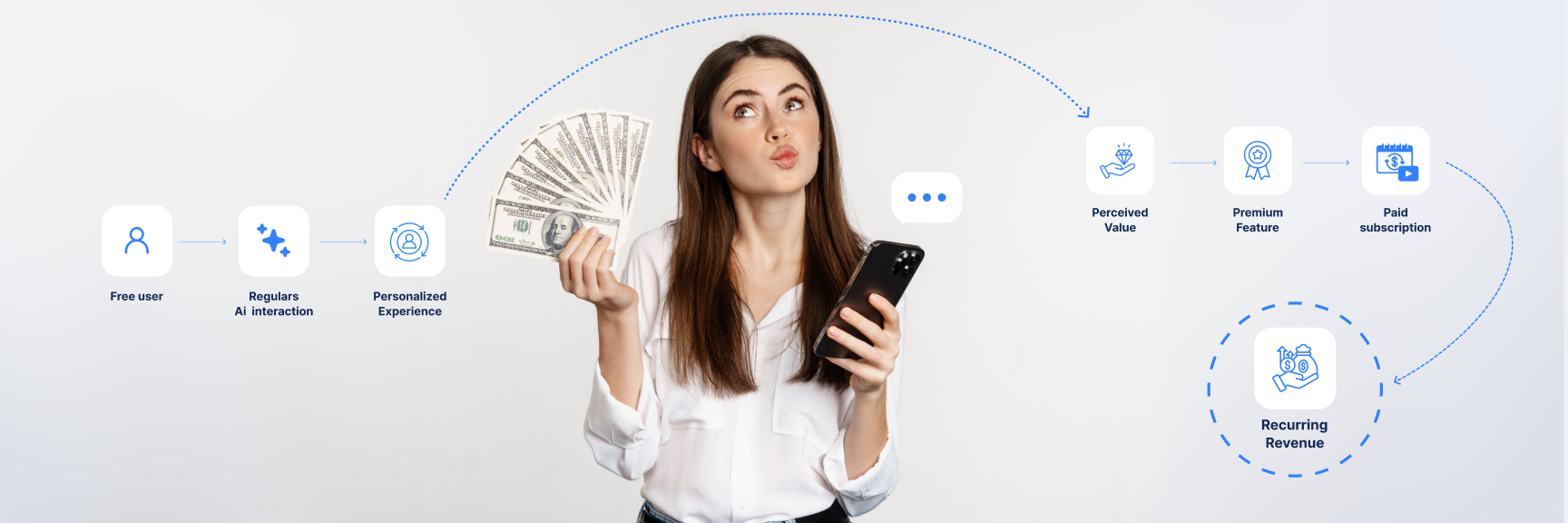
Introduction:
"The biggest opportunity in artificial intelligence is to improve people's lives." — Fei-Fei Li, Professor of Computer Science, Stanford University
A few years ago, the idea of having meaningful conversations with artificial intelligence felt like science fiction. Today, it's becoming an everyday habit. Millions of people now open an AI companion app as naturally as they open a messaging app—whether it's to unwind after work, ask for advice, brainstorm ideas, practice a new language, or simply have someone (or something) to talk to.
This shift is happening at an incredible pace. According to Grand View Research, the global AI companion market is projected to reach USD 48 billion in 2026 and grow to more than USD 318 billion by 2033, representing a remarkable 31% compound annual growth rate (CAGR). These figures highlight not only the growing popularity of AI companions but also the massive business opportunity behind them.
Yet there's an interesting contradiction. Most AI companion apps don't ask users to pay before they start chatting. You can download the app, create an account, and enjoy unlimited conversations—at least initially—without spending a single dollar.
So, where does the money come from?
It's a question many users never think about. Behind every AI-generated reply is a sophisticated infrastructure that includes large language models, cloud computing, data storage, safety systems, and continuous product development—all of which cost money to build and maintain. For AI companion companies, the real challenge isn't just creating engaging conversations; it's turning those conversations into a sustainable business.
In this article, we'll explore how AI companion apps generate revenue in 2026, examine the business models used by industry leaders, and discuss why some monetization strategies are more successful than others. We'll also look at Chatti AI, an emerging AI companion that is taking a different approach by focusing on delivering an exceptional user experience and building long-term trust before prioritizing aggressive monetization.
Why AI Companion Apps Have Become a Billion-Dollar Opportunity?
The success of AI companion apps isn't driven by a single trend—it's the result of multiple technological, social, and economic factors coming together. Advances in generative AI have made conversations more natural, while changing consumer expectations have increased demand for personalized digital experiences.
Today, AI companions serve as productivity assistants, learning partners, entertainment platforms, and conversational companions, creating multiple opportunities for businesses to generate recurring revenue. This combination of widespread adoption and diverse use cases has made AI companion startups one of the most attractive investment opportunities in the artificial intelligence industry.
Explosive Market Growth Is Driving the AI Companion Economy:
The AI companion industry has experienced remarkable growth over the past few years. Improvements in large language models (LLMs), faster cloud computing, and lower AI infrastructure costs have enabled companies to deliver increasingly sophisticated conversational experiences.
As consumer adoption continues to rise, market analysts expect the AI companion sector to become one of the fastest-growing categories within the broader AI economy. This rapid expansion has attracted startups, technology giants, and investors who recognize the long-term commercial potential of personalized AI experiences.
Changing User Behavior Is Fueling Daily AI Adoption:
Consumer behavior has changed significantly since conversational AI became widely available. Instead of using AI only to answer questions, people now interact with AI companions throughout the day to brainstorm ideas, seek advice, practice languages, learn new skills, and organize their work.
As users develop daily habits around these interactions, AI companion apps benefit from higher engagement and stronger customer retention. This shift from occasional use to everyday reliance has become one of the industry's strongest growth drivers.
AI Companions Are Addressing the Global Loneliness Challenge:
Loneliness has become a growing social concern across many parts of the world, affecting people of all ages. While AI cannot replace genuine human relationships, AI companions provide an accessible way for users to engage in meaningful conversations whenever they need someone to talk to.
Many people use these applications to reduce feelings of isolation, reflect on their thoughts, or simply enjoy consistent interaction without fear of judgment. As awareness of mental and emotional well-being continues to grow, AI companionship has emerged as a complementary form of digital support.
Productivity Features Are Expanding Beyond Traditional AI Assistants:
Modern AI companions are increasingly combining conversational intelligence with productivity tools. Users rely on them to draft emails, summarize documents, create to-do lists, prepare presentations, generate content ideas, and solve everyday problems. Unlike conventional productivity software that requires switching between multiple applications, AI companions provide a unified conversational interface capable of assisting with a wide range of personal and professional tasks. This versatility makes them valuable companions throughout the workday.
Entertainment Is Becoming a Major Driver of User Engagement:
Entertainment plays a significant role in keeping users engaged with AI companion apps. Many platforms support interactive storytelling, role-playing, creative writing, language practice, games, and personalized conversations that evolve over time.
These features encourage users to return regularly, increasing both session duration and long-term engagement. For companies, higher engagement often translates into stronger subscription conversions and improved customer lifetime value.
Mental Wellness Is Emerging as a Key Use Case:
As awareness of mental wellness grows, many AI companion platforms have introduced features that encourage self-reflection and emotional well-being. Guided journaling, mindfulness exercises, mood tracking, stress management techniques, and daily emotional check-ins have become common features within companion apps.
While these tools should never replace licensed mental health professionals, they can provide accessible support that helps users build healthier daily habits and maintain emotional awareness between professional consultations.
Greater AI Accessibility Is Accelerating Global Adoption:
One of the biggest reasons behind the rapid growth of AI companions is accessibility. Advances in cloud infrastructure, affordable smartphones, faster internet connections, and multilingual AI models have made conversational AI available to billions of people worldwide.
Users no longer require technical expertise to benefit from artificial intelligence; they simply download an application and begin chatting. This ease of access has expanded AI companionship beyond technology enthusiasts to students, professionals, entrepreneurs, creators, and older adults across diverse markets.
Why Investors Are Betting Big on AI Companion Startups?
AI companion startups are attracting significant investor interest because they represent much more than conversational applications. Unlike traditional chatbots that perform isolated tasks, AI companions are designed to build ongoing, personalized relationships with users. They provide emotional support, productivity assistance, entertainment, learning, and daily companionship, encouraging users to return regularly. This ability to create continuous engagement makes AI companion platforms particularly attractive from both a business and investment perspective.
A major reason investors are optimistic about this market is its recurring revenue potential. Most AI companion platforms operate on subscription-based business models while also generating income from premium features, virtual gifts, exclusive AI personalities, personalized experiences, and other digital services. These recurring revenue streams provide greater financial predictability than one-time purchases, allowing companies to increase customer lifetime value as users remain engaged over time.
Research also suggests that AI companions can strengthen long-term customer relationships through personalization and trust. According to Chaturvedi, Verma, and Srivastava (2024), AI companions enhance relationship marketing by delivering personalized interactions that foster customer engagement, satisfaction, and loyalty. As AI systems learn from user preferences and communication patterns, they can provide increasingly relevant and meaningful experiences, encouraging stronger user relationships and long-term platform usage.
Another important investment factor is scalability. Once an AI companion platform has developed its core technology, it can serve millions of users worldwide with relatively low incremental operating costs. Advances in large language models, voice AI, memory systems, and emotional intelligence are making AI companions more natural, context-aware, and capable of supporting users in everyday activities. As these capabilities continue to evolve, AI companions are expected to expand beyond messaging into voice assistants, wearable devices, smart home integration, education, wellness, and creator ecosystems, creating additional monetization opportunities.
Although challenges such as privacy, ethical AI development, and regulatory compliance remain important considerations, the long-term outlook for the industry remains promising. Investors view AI companion startups as businesses capable of combining scalable artificial intelligence with recurring revenue and relationship-driven customer experiences. As consumer adoption continues to grow and AI technology becomes increasingly sophisticated, these platforms have the potential to become an important segment of the broader consumer AI market.
The Core Business Model of AI Companion Apps
At first glance, it might seem that AI companion apps make money simply by charging users for conversations. In reality, the conversation itself is rarely the product. Instead, successful AI companion companies build a business around user engagement, trust, retention, and recurring subscriptions.
The longer users interact with an AI companion, the more personalized the experience becomes. The AI learns conversation styles, remembers preferences (where permitted), adapts to personalities, and provides increasingly relevant responses. This creates a habit of daily usage, which is far more valuable than a single purchase.
In other words, the real business model isn't selling chats—it's building long-term relationships with users.
From Free Conversations to Recurring Revenue
Most AI companion platforms follow a similar customer journey:
Free User
↓
Regular AI Interactions
↓
Personalized Experience & Trust
↓
Perceived Value Increases
↓
Premium Features & Exclusive Capabilities
↓
Paid Subscription
↓
Recurring Revenue
This model allows users to experience the product before making a purchasing decision. Once users recognize value in the AI companion, they are more likely to subscribe for additional features that improve the overall experience.
User Engagement Is the Foundation of Monetization
Unlike traditional mobile applications that focus on occasional usage, AI companion apps aim to become part of a user's daily routine. Whether someone spends ten minutes chatting before bed or relies on an AI companion throughout the workday, every meaningful interaction strengthens engagement.
Higher engagement leads to:
- More daily active users (DAU)
- Better user retention
- Increased customer lifetime value (LTV)
- Higher subscription conversion rates
For investors, these metrics are often more important than the total number of app downloads.
Premium Features Create Sustainable Revenue
While basic conversations are usually available for free, premium subscriptions unlock advanced capabilities that enhance the overall experience.
Common premium features include:
- Unlimited conversations
- Faster AI models
- Longer conversation memory
- Voice interactions
- Personalized AI personalities
- Image generation
- Relationship progression
- Exclusive companion experiences
Rather than charging users immediately, companies allow them to experience the product first and upgrade only after they perceive ongoing value.
Building an Ecosystem Instead of a Single Feature
The most successful AI companion companies don't rely on chat alone. They gradually expand into a broader ecosystem that encourages users to spend more time within the platform.
Depending on the product strategy, that ecosystem may include:
- AI voice conversations
- Memory and personalization
- Journaling
- Daily coaching
- Mood tracking
- Creative writing
- Productivity tools
- Community features
- AI-generated content
The broader the ecosystem, the more reasons users have to remain engaged over the long term.
How Different AI Companion Apps Approach the Market
Although most AI companion apps share a similar subscription-based business model, they differ significantly in how they present the AI companion itself.
Replika AI: Building Emotional Connections Through an Animated Avatar
One of the earliest AI companion platforms, Replika AI, popularized the idea of creating a virtual friend represented by a customizable 3D avatar. Users can build relationships with their companion, unlock new appearances, voice conversations, and additional relationship experiences through a premium subscription.
The animated avatar becomes part of the product's identity, appealing to users who enjoy role-playing and virtual character interactions.
Paradot AI: A Virtual Character Designed Around Storytelling
Paradot AI follows a similar approach by introducing an animated AI character with a unique personality and evolving memories. The experience emphasizes relationship building, virtual companionship, and interactive storytelling, making the AI feel like a digital character rather than a realistic human assistant.
This strategy attracts users who enjoy immersive and game-like conversational experiences.
Chatti AI: A Human-Like Companion Focused on Natural Conversations
Rather than centering the experience around an animated avatar, Chatti AI takes a different approach by emphasizing human-like conversations. The goal is to make interactions feel closer to talking with a real person instead of communicating with a virtual character.
This design philosophy focuses on:
- Natural conversational flow
- Realistic personalities
- Meaningful discussions
- Everyday assistance
- Emotional intelligence
- Long-term user trust
For many users, especially professionals and adults seeking practical conversations, a human-like interface can reduce the sense of interacting with a game or fictional character. Instead, it creates an experience that feels more familiar and conversational.
However, this does not necessarily make human-like companions better than animated companions. The choice depends on the user's expectations. Some users enjoy the creativity and entertainment of animated AI characters, while others prefer a companion that feels more like a real conversational partner.
Human-Like vs. Animated AI Companions
Human-Like AI Companion | Animated AI Companion |
Focuses on realistic conversations | Focuses on virtual character experiences |
Appeals to professionals and everyday users | Appeals to role-play and virtual companion enthusiasts |
Prioritizes natural interaction | Prioritizes visual engagement and customization |
Feels closer to chatting with a person | Feels closer to interacting with a digital character |
Suitable for productivity and daily conversations | Suitable for entertainment and immersive experiences |
Neither approach is universally superior. Instead, they represent different product positioning strategies within the AI companion market. As the industry matures, companies will continue differentiating themselves through their user experience, personalization capabilities, and ecosystem rather than through conversation quality alone.
Ultimately, regardless of whether an AI companion appears as a realistic conversational partner or an animated avatar, the underlying business model remains the same: earn user trust first, increase engagement over time, and convert that long-term relationship into sustainable recurring revenue.
Virtual Currency and In-App Purchases
While subscriptions remain the primary source of revenue for most AI companion apps, many platforms generate additional income through virtual currencies and in-app purchases. Rather than charging users for every conversation, these apps offer optional digital items that enhance the overall experience without making the core product feel restrictive. This approach has been widely adopted across gaming, social media, and increasingly, the AI companion industry because it allows users to personalize their interactions while providing companies with a scalable revenue stream.
Virtual Currency Creates Flexible Spending Opportunities
Many AI companion platforms introduce an in-app currency—such as coins, gems, or credits—that users can purchase with real money. Instead of subscribing to a monthly plan, users spend these virtual currencies on features they value most. This gives users greater flexibility while encouraging small, incremental purchases over time.
For example, Replika AI uses gems to unlock avatar customization, relationship experiences, and premium interactions. Similarly, platforms such as Paradot AI and Talkie AI have experimented with premium interactions, virtual gifts, and enhanced character experiences to deepen user engagement. Although these purchases are optional, they allow users to personalize their AI companion beyond the free experience.
Personalization Is a Powerful Revenue Driver
One of the biggest advantages of in-app purchases is personalization. Users become emotionally invested in an AI companion that reflects their preferences, making them more willing to pay for features that improve the experience.
Popular premium purchases across AI companion apps include:
- Virtual coins or gems
- Digital gifts
- Exclusive stickers and reactions
- Character outfits and appearance customization
- Personality upgrades
- Exclusive conversation scenarios
- Faster AI responses
- Additional memory or relationship progression
These purchases don't simply generate revenue—they strengthen the emotional connection users develop with their AI companions by making each experience feel more unique and personal.
Higher Engagement Often Leads to Higher Revenue
From a business perspective, virtual purchases do more than increase sales—they encourage users to remain active within the platform. Every personalized interaction gives users another reason to return, increasing session duration and long-term engagement.
This often results in a higher Average Revenue Per User (ARPU) because users who feel connected to the product are more likely to make repeat purchases over time.
Many successful digital platforms—including gaming companies, streaming services, and AI companion apps—have demonstrated that users are generally more willing to spend money on experiences they already enjoy than on features they haven't yet experienced.
A Future Opportunity for Chatti AI
As Chatti AI continues to evolve, virtual purchases could become a natural extension of its business model without compromising the quality of free conversations. Because Chatti AI focuses on delivering a more human-like conversational experience rather than an animated avatar, future premium offerings may center less on cosmetic customization and more on enhancing meaningful interactions.
Potential opportunities could include personalized AI personalities, exclusive conversation modes, long-term memory enhancements, voice experiences, or specialized companions designed for learning, productivity, or wellness.
By keeping the core conversational experience accessible while offering optional premium enhancements, Chatti AI could diversify its revenue streams and increase user engagement without disrupting the trust it aims to build with its community.
Ultimately, the goal of virtual currency is not to encourage unnecessary spending but to give users the freedom to customize their experience while creating a sustainable business model that supports continued innovation and product development.
Why Voice and Emotional AI Drive Premium Subscriptions?
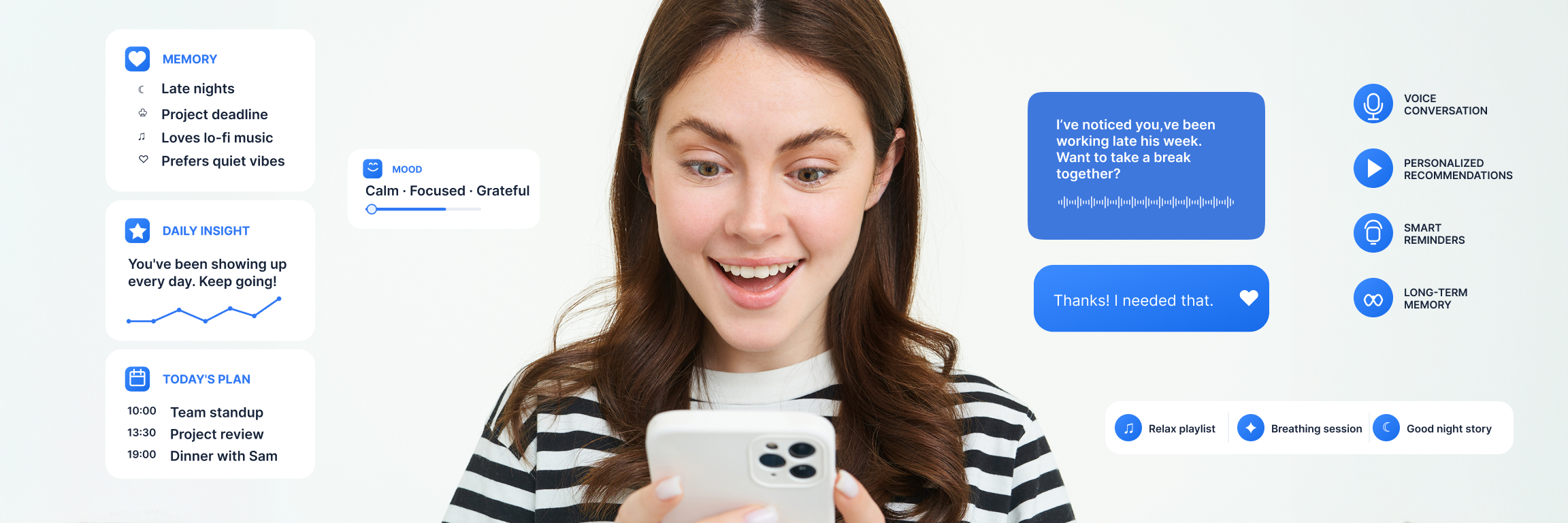
As AI companion apps become more human-like, premium features are shifting beyond simple chat. Voice conversations, emotional tone detection, personalized greetings, long-term memory, and relationship progression create a deeper, more personal experience that users interact with daily.
These features require more advanced AI models, greater computing resources, and continuous personalization, making them ideal for subscription plans. Users are often willing to pay for an AI companion that remembers past conversations, understands emotions, and develops a more meaningful, evolving relationship over time.
While most AI companion apps focus on individual users, the underlying technology also has significant value for businesses. AI conversation engines can be adapted for customer support, virtual sales assistants, employee onboarding, coaching, and education, allowing organizations to automate personalized interactions at scale. Instead of building separate AI systems from scratch, companies can license proven conversational AI platforms for their own products and services.
As AI continues to mature, the technology behind Chatti AI could evolve beyond personal companionship to support enterprise use cases, creating new licensing and B2B revenue opportunities alongside its consumer-focused business model.
API and Platform Monetization:
As AI companion platforms grow, they can generate revenue by offering their technology to other developers and businesses instead of serving only end users. This includes charging for API access, allowing third-party applications to integrate AI conversation, memory, and personalization features into their own products. Companies can also offer white-label AI solutions, enabling businesses to launch branded AI assistants without developing the underlying technology themselves. Additional revenue opportunities come from SDK licensing, which provides ready-to-use software development kits for mobile and web applications, as well as developer tools that simplify AI integration, analytics, and customization. Over time, Chatti AI could expand beyond a consumer app into a platform that empowers developers and enterprises, creating scalable B2B revenue streams alongside its subscription business.
Why User Retention Matters More Than Downloads?
Many founders celebrate reaching 100,000 or even 1 million downloads, but downloads alone rarely determine whether an AI companion app becomes a successful business. What matters most is how many users continue using the app over time. A smaller app with highly engaged users can generate significantly more revenue than a larger app with poor retention.
For example, imagine App A receives 1 million downloads, but only 5% of users return after 30 days. In contrast, App B attracts just 100,000 downloads, yet 40% of users remain active after a month. If App B also converts a higher percentage of users into premium subscribers, it can easily outperform App A in both recurring revenue and profitability despite having far fewer downloads.
To measure long-term success, AI companion companies focus on several key metrics:
- Daily Active Users (DAU): The number of users who actively use the app each day.
- Monthly Active Users (MAU): The total number of unique users who engage with the app over a month.
- Retention Rate: The percentage of users who continue using the app after a specific period, such as 7, 30, or 90 days.
- Session Duration: The average amount of time users spend in the app during each visit. Longer conversations often indicate stronger engagement.
- Customer Lifetime Value (LTV): The total revenue a user is expected to generate throughout their relationship with the app.
- Churn Rate: The percentage of users who stop using the app or cancel their subscriptions. Lower churn leads to more predictable recurring revenue.
- Premium Conversion Rate: The percentage of free users who upgrade to a paid subscription after experiencing the product's value.
Case Study: Engagement Beats Scale
Consider two hypothetical AI companion apps:
Metric | App A | App B |
Downloads | 1,000,000 | 100,000 |
30-Day Retention | 5% | 40% |
Active Users After 30 Days | 50,000 | 40,000 |
Premium Conversion | 1% | 12% |
Paying Subscribers | 500 | 4,800 |
Although App A generated ten times more downloads, App B built a much healthier business because its users stayed engaged and were more willing to pay. The higher retention rate increased user trust, created stronger relationships with the AI, and ultimately produced much greater recurring revenue.
This is why venture capitalists and investors often prioritize retention, engagement, and customer lifetime value over download numbers alone. High retention demonstrates that users find lasting value in the product, making future revenue more predictable and sustainable. For
AI companion apps such as Chatti AI, improving user satisfaction, encouraging daily conversations, and gradually converting loyal users into premium subscribers will have a far greater impact on long-term growth than simply chasing more installs.
Where Chatti AI Fits Into This Business Model?
Like many AI companion apps, Chatti AI is still in the process of understanding what users value most in an AI relationship. At its current stage, the primary focus is on improving conversation quality, making interactions feel more natural, and building user trust through consistent, engaging experiences. Rather than rushing to monetize every feature, the team is learning from real user behavior, analyzing how people interact with the AI, and collecting feedback to identify what genuinely improves the experience.
This user-first approach also helps shape future product decisions. Insights gathered from conversations and feature requests can guide the development of premium capabilities such as voice interactions, personalized memories, emotional intelligence, and deeper long-term relationships. At the same time, Chatti AI is exploring sustainable monetization models—including subscriptions, premium features, and platform opportunities—while ensuring that any paid offering delivers clear value instead of limiting the core experience.
The long-term goal is to build an AI companion that users return to because it is genuinely helpful, engaging, and trustworthy—not simply because it is filled with paywalls. Strong user retention, meaningful conversations, and continuous product improvement provide a healthier foundation for sustainable growth than aggressive short-term monetization.
Rather than maximizing short-term revenue, Chatti AI is focused on creating meaningful AI relationships first. As the platform evolves, monetization can be introduced in ways that genuinely enhance the user experience.
Challenges Every AI Companion Startup Faces
Building a successful AI companion app is about far more than creating an intelligent chatbot. Startups must overcome significant technical, financial, and operational challenges before they can achieve sustainable growth.
One of the biggest obstacles is high AI inference costs. Every conversation requires computing power, and as the user base grows, so do GPU expenses for running large language models.
Without careful optimization, infrastructure costs can quickly outpace revenue, especially for apps offering unlimited or high-quality AI interactions.
Another major challenge is user acquisition. The AI companion market has become increasingly competitive, with new apps launching almost every month. Standing out requires strong branding, effective App Store Optimization (ASO), community building, content marketing, and continuous product improvements.
Even after acquiring users, startups must keep them engaged, as user retention is often more difficult than attracting new downloads.
Trust also plays a critical role. AI companion apps handle personal conversations, making privacy and data security essential. Users expect transparency about how their data is stored, processed, and protected. At the same time, companies must address ethical concerns, ensuring their AI behaves responsibly, avoids harmful advice, and clearly communicates that it is an artificial intelligence rather than a human.
Maintaining a safe environment requires robust content moderation systems that can detect abusive, illegal, or inappropriate interactions while still allowing natural conversations. Achieving the right balance between user freedom and platform safety remains a complex challenge for every AI startup.
Finally, startups face subscription fatigue. Many consumers already pay for multiple digital services, making them selective about adding another monthly subscription. AI companion apps must therefore provide continuous value through better conversations, meaningful personalization, exclusive features, and regular improvements that justify the ongoing cost.
The startups that succeed are typically those that balance innovation with sustainability—managing infrastructure costs, earning user trust, retaining engaged communities, and delivering enough long-term value to build a profitable business without compromising the overall user experience.
The Future of AI Companion Monetization:
The next generation of AI companion apps will extend far beyond text-based conversations, creating entirely new monetization opportunities. A real-world example is Meta AI, which is being integrated across Facebook, Instagram, WhatsApp, and Messenger. Instead of existing as a standalone chatbot, Meta AI is becoming part of the apps people already use every day.
Users can ask questions, generate content, brainstorm ideas, search the web, and receive assistance without leaving the conversation. This approach solves a common problem for AI products: users do not need to install or regularly open another app because AI is available where they already spend their time.
Meta's broader vision also highlights the opportunities and challenges ahead. Today, users often switch between different apps to communicate, search for information, organize tasks, and create content. AI agents have the potential to reduce this friction by acting as a single intelligent assistant across these experiences.
In the future, AI companions could schedule meetings from a WhatsApp conversation, recommend restaurants while chatting in Messenger, help draft Instagram captions, summarize long discussion threads, or remind users about upcoming events based on previous conversations.
As AI becomes more capable of handling real-world tasks, premium subscriptions become easier to justify because they save users time and increase productivity.
The future is also becoming increasingly voice-first. Natural, real-time voice conversations will make AI companions feel more like trusted assistants than chatbots. Meta has already demonstrated voice interactions within its AI ecosystem, pointing toward a future where conversations become faster and more natural. Combined with wearable devices such as Ray-Ban Meta smart glasses, wireless earbuds, and smartwatches, AI companions could provide continuous assistance throughout the day without requiring users to unlock their phones or launch a dedicated application.
Emerging technologies such as augmented reality (AR) and virtual reality (VR) will further transform AI companionship. Through devices like Meta Quest headsets, users can interact with AI in immersive environments for learning, collaboration, entertainment, and productivity. At the same time, the growth of the creator economy could enable developers, educators, influencers, and businesses to build, customize, and monetize their own AI personalities, creating marketplace and revenue-sharing opportunities similar to today's app stores.
Another major trend is emotion-aware AI, where companions better understand tone, context, and emotional cues to provide more empathetic and relevant responses. AI companions may also evolve beyond serving individuals to supporting families and teams. For example, an AI assistant could coordinate family schedules across WhatsApp, summarize group discussions in Messenger, recommend shared activities, or help project teams organize tasks and meetings through conversational interfaces.
Meta's journey also illustrates an important dilemma facing every AI company: users expect AI to be helpful without becoming intrusive. Integrating AI into social platforms raises questions about privacy, transparency, personalization, and responsible data usage. The solution lies in giving users meaningful control over their AI experiences, clearly explaining how personal information is used, providing privacy settings, and ensuring AI interactions remain optional rather than forced. Companies that successfully balance convenience with user trust are more likely to achieve long-term adoption.
As these technologies mature, AI companion businesses will generate revenue through a combination of subscriptions, enterprise licensing, developer platforms, creator marketplaces, and intelligent services. The companies that succeed will be those that focus not only on advanced AI capabilities but also on delivering genuine, long-term value that users trust and rely on every day.
Conclusion:
AI companion apps generate revenue by building long-term relationships rather than simply selling conversations. Their business models combine free user acquisition, personalized experiences, premium subscriptions, virtual purchases, enterprise licensing, and future platform opportunities to create sustainable recurring revenue.
As AI technology becomes more intelligent and integrated into daily life, the companies that succeed will be those that prioritize user trust, engagement, and continuous innovation over short-term monetization. For Chatti AI, focusing on natural conversations and delivering genuine value before introducing premium features can establish a strong foundation for long-term growth in the rapidly expanding AI companion market.
Reference:
- Chaturvedi, A., Verma, S., & Srivastava, P. (2024). AI companions and relationship marketing: Enhancing customer engagement through personalized interactions.
- Deloitte. (2024). The state of generative AI in the enterprise.https://www2.deloitte.com/us/en/pages/consulting/articles/state-of-generative-ai-in-the-enterprise.html
- Goldman Sachs. (2023). Generative AI could raise global GDP by 7%.https://www.goldmansachs.com/insights/articles/generative-ai-could-raise-global-gdp.html
- Grand View Research. (2025). AI companion market size, share & trends analysis report.https://www.grandviewresearch.com/industry-analysis/ai-companion-market-report
- McKinsey & Company. (2023). The economic potential of generative AI: The next productivity frontier.https://www.mckinsey.com/capabilities/quantumblack/our-insights/the-economic-potential-of-generative-ai-the-next-productivity-frontier
- Meta. (2025). Meta AI. https://ai.meta.com/
- PwC. (2024). Sizing the prize: What's the real value of AI for your business and how can you capitalize?https://www.pwc.com/gx/en/issues/artificial-intelligence/publications/artificial-intelligence-study.html
- Sensor Tower. (2025). Mobile app intelligence. https://sensortower.com/
- Stanford Institute for Human-Centered Artificial Intelligence. (2025). Stanford HAI. https://hai.stanford.edu/
- data.ai. (2025). Mobile market insights. https://www.data.ai/
- World Health Organization. (2022). Mental health. https://www.who.int/health-topics/mental-health
FAQ’s
1. How do AI companion apps make money?
AI companion apps primarily earn revenue through subscriptions, premium features, in-app purchases, API licensing, and enterprise solutions.
2. Are AI companion apps profitable?
Yes. AI companion apps can be highly profitable when they achieve strong user retention, recurring subscriptions, and high customer lifetime value.
3. What is the best business model for AI companion startups?
The freemium subscription model is the most popular, allowing users to access basic features for free while paying for premium experiences.
4. Why do AI companion apps charge subscriptions?
Subscriptions help cover AI infrastructure costs, cloud computing, continuous development, and advanced premium features.
5. Can AI companion apps earn money without ads?
Yes. Most AI companion apps rely on subscriptions, in-app purchases, premium upgrades, and business licensing instead of advertisements.
6. Is Chatti AI free to use?
Yes. Chatti AI offers free access to its core AI companion features, with premium enhancements expected as the platform evolves.
7. What premium features do AI companion apps usually offer?
Common premium features include unlimited chats, voice conversations, long-term memory, personalized AI companions, and advanced AI models.
8. What is the future of AI companion businesses?
The future includes voice-first AI, emotion-aware companions, wearable integration, creator marketplaces, enterprise AI, and personalized digital assistants.