 services@aitchsoft.com
Introduction :
"AI is perhaps the most transformative technology of our time."
Satya Nadella
Artificial intelligence is reshaping the global workforce at a pace few could have predicted. In 2026, businesses of all sizes—from startups to multinational enterprises—are integrating AI into their daily operations to automate repetitive tasks, improve decision-making, reduce operational costs, and increase productivity.
With the rapid advancement of generative AI, intelligent automation, and AI-powered assistants, the workplace is undergoing one of the most significant transformations since the rise of the internet.
As AI adoption accelerates, a pressing question continues to dominate conversations among employees, business leaders, students, and policymakers alike: Will AI replace human jobs in 2026? While some reports predict that millions of jobs could be affected by automation, others suggest that AI will create entirely new career paths and industries.
The reality lies somewhere in between. Rather than replacing every job, AI is changing how work is performed by automating routine tasks while increasing demand for human creativity, critical thinking, emotional intelligence, and strategic decision-making.
This shift has sparked growing concerns about job security across nearly every industry. Professionals are asking whether their roles will remain relevant, businesses are evaluating how AI can improve efficiency, and governments are exploring policies to prepare workers for an AI-driven economy.
From customer service and software development to marketing, finance, healthcare, and manufacturing, AI is transforming traditional workflows and redefining the skills employers value most.
However, history shows that every major technological revolution—from the Industrial Revolution to the internet and cloud computing—has disrupted existing jobs while creating new opportunities.
Artificial intelligence is no exception. The challenge is no longer whether AI will influence the future of work, but how individuals and organizations can adapt to remain competitive in an increasingly digital world.
In this comprehensive guide, we'll explore the reality behind AI job replacement in 2026, separating facts from fear.
You'll learn which jobs are most vulnerable to AI automation, the industries experiencing the greatest transformation, the new careers emerging because of AI, and the practical skills professionals can develop to thrive in the evolving workplace. Whether you're an employee planning your next career move, a business owner embracing AI technologies, or simply curious about the future of work, this guide will provide the insights needed to navigate the next era of employment with confidence.
What Is AI Job Replacement?
Artificial intelligence (AI) job replacement refers to the process of AI-powered technologies performing tasks that were once carried out exclusively by humans. Unlike traditional software that follows fixed instructions, modern AI systems can learn from data, recognize patterns, generate content, make predictions, and even assist in decision-making.
This ability allows organizations to automate a wide range of routine and repetitive tasks across industries, improving efficiency while reducing operational costs. However, AI job replacement does not necessarily mean eliminating entire professions.
In many cases, AI replaces specific tasks within a role, enabling employees to focus on higher-value work that requires creativity, critical thinking, emotional intelligence, and human judgment.
Understanding Artificial Intelligence in the Workplace:
Artificial intelligence has become an integral part of today's workplace, transforming how businesses operate and how employees perform their daily responsibilities.
Organizations now use AI-powered tools to streamline workflows, analyze vast amounts of data, automate customer interactions, generate reports, write code, create marketing content, and provide real-time business insights. Industries such as healthcare, finance, retail, manufacturing, education, and software development are increasingly relying on AI to improve productivity and deliver better customer experiences.
Rather than working independently, AI often functions as a digital assistant that enhances human capabilities, allowing professionals to complete complex tasks more quickly and accurately. As AI technologies continue to evolve, the modern workplace is shifting toward a collaborative model where humans and intelligent systems work together instead of competing against one another.
How AI Is Different from Traditional Automation?
Although artificial intelligence and automation are often used interchangeably, they are fundamentally different technologies. Traditional automation is designed to perform repetitive tasks by following predefined rules and workflows. For example, an automated payroll system calculates employee salaries using fixed formulas, while a manufacturing robot repeatedly performs the same physical action on an assembly line.
Artificial intelligence, on the other hand, goes beyond rule-based programming by learning from historical data, recognizing patterns, adapting to new information, and making recommendations or predictions.
Generative AI tools can create written content, summarize documents, answer customer questions, generate software code, and even produce images or videos based on user prompts. This adaptability makes AI far more versatile than conventional automation, enabling businesses to automate cognitive tasks that previously required human expertise.
Why Businesses Are Investing in AI?
Businesses around the world are investing heavily in artificial intelligence because it offers significant competitive advantages. AI enables organizations to increase productivity, reduce operational expenses, improve decision-making, and deliver personalized customer experiences at scale.
By automating repetitive and time-consuming tasks, employees can dedicate more time to strategic initiatives, innovation, and customer relationships. AI also helps organizations analyze large datasets in seconds, identify trends, forecast demand, detect fraud, and optimize business operations with greater accuracy than traditional methods. As global competition intensifies and customer expectations continue to rise, companies view AI not simply as a cost-saving technology but as a long-term investment that drives innovation, supports business growth, and prepares organizations for the future of work. For this reason, AI adoption has become a strategic priority across enterprises
Why Is AI Replacing Jobs?
Artificial intelligence is replacing certain job tasks because it enables businesses to operate more efficiently, make faster decisions, and remain competitive in an increasingly digital economy. Rather than replacing every employee, AI is primarily transforming roles by automating repetitive, data-intensive, and time-consuming tasks that previously required significant human effort.
As organizations face growing customer expectations, rising operational costs, and increased market competition, many are adopting AI to streamline workflows and improve overall business performance. This shift is changing the nature of work across industries, encouraging employees to focus on strategic thinking, creativity, problem-solving, and relationship-building while AI handles routine operations.
Business Benefits of AI:
One of the primary reasons businesses are investing in artificial intelligence is its ability to improve operational performance while supporting long-term growth. AI-powered systems can process large volumes of information, identify patterns, generate insights, and automate repetitive tasks with remarkable speed and accuracy.
These capabilities help organizations make data-driven decisions, enhance customer experiences, and reduce manual workloads. AI is now being used in customer support, marketing, healthcare, finance, manufacturing, software development, and supply chain management, allowing businesses to innovate faster and respond more effectively to changing market demands. For many organizations, AI is no longer viewed as an experimental technology but as a strategic asset that strengthens competitiveness and drives digital transformation.
Increased Productivity and Efficiency:
Artificial intelligence significantly improves workplace productivity by automating routine processes that consume valuable employee time. Tasks such as data entry, document processing, scheduling, inventory management, report generation, and customer inquiries can now be completed within seconds using AI-powered tools.
Employees no longer need to spend hours performing repetitive administrative work and can instead focus on activities that require critical thinking, creativity, collaboration, and decision-making. AI also minimizes human error, accelerates workflows, and provides real-time insights that help organizations respond more quickly to business challenges.
As a result, teams become more productive, projects are completed faster, and businesses can achieve higher levels of efficiency without proportionally increasing their workforce.
Cost Reduction:
Reducing operational costs is another major factor driving AI adoption. Many repetitive business functions require considerable time, labor, and financial resources when performed manually.
By automating these tasks, organizations can lower administrative expenses, reduce processing times, and optimize the use of existing resources. AI also helps businesses forecast demand, manage inventory more effectively, detect fraudulent activities, and improve resource allocation, leading to significant long-term savings.
While implementing AI solutions often requires an initial investment in technology and employee training, many organizations view these costs as worthwhile because of the productivity gains, operational efficiencies, and scalability that AI delivers over time.
24/7 Availability:
Unlike human employees, artificial intelligence systems can operate continuously without requiring breaks, shifts, or holidays. This around-the-clock availability enables businesses to provide uninterrupted services, particularly in customer support, e-commerce, banking, healthcare, and IT operations.
AI-powered chatbots can answer customer questions at any hour, automated monitoring systems can detect security threats in real time, and intelligent software can process transactions or analyze data throughout the day and night.
Continuous operation not only improves customer satisfaction but also allows organizations to respond more quickly to market demands and business opportunities. While human expertise remains essential for complex decision-making, empathy, and strategic planning, AI's ability to work 24/7 has become a key advantage for organizations seeking greater efficiency and responsiveness in the modern workplace.
Why Everyone Is Asking, "Will AI Replace Human Jobs in 2026?"
The question, "Will AI replace human jobs in 2026?" has become one of the most debated topics in the global workforce. As artificial intelligence continues to evolve, businesses are integrating AI-powered tools into everyday operations at an unprecedented pace.
From automating repetitive administrative tasks to generating content, analyzing data, assisting with software development, and improving customer support, AI is changing how work is performed across industries.
These rapid advancements have sparked both excitement and uncertainty. While organizations view AI as a powerful driver of innovation and productivity, many employees are understandably concerned about how these technologies could reshape their careers. As a result, discussions about AI, automation, and the future of work have moved beyond the technology sector and into boardrooms, classrooms, and households around the world.
World Economic Forum (Recommended)
"AI is expected to transform jobs rather than simply replace them, creating new opportunities while changing the skills employers value most."
The Rise of AI Assistants:
One of the biggest drivers behind these concerns is the rapid rise of AI assistants. Modern AI tools have evolved far beyond simple chatbots and virtual assistants. Today, AI-powered assistants can draft emails, summarize meetings, analyze spreadsheets, write software code, generate reports, create marketing content, and answer complex questions within seconds.
Businesses are increasingly integrating AI assistants into daily workflows to help employees complete routine tasks more efficiently and make faster, data-driven decisions.
According to Microsoft's Work Trend Index and McKinsey's research on generative AI in the workplace, organizations are moving toward a future where employees collaborate with AI agents rather than using AI only as a standalone tool. This shift is redefining how knowledge work is performed and enabling professionals to focus on higher-value responsibilities that require creativity, judgment, and strategic thinking.
AI Adoption Across Industries:
Artificial intelligence is no longer limited to technology companies. Its adoption has expanded rapidly across industries, transforming the way organizations operate and deliver services. Healthcare providers use AI to assist with diagnostics and patient care, financial institutions rely on AI for fraud detection and risk analysis, retailers leverage AI to personalize customer experiences, manufacturers optimize production with predictive maintenance, and marketing teams automate campaign management and content creation.
The World Economic Forum, OECD, and McKinsey & Company report that AI adoption continues to accelerate as businesses seek greater efficiency, improved decision-making, and competitive advantage. This widespread adoption demonstrates that AI is becoming a core business capability rather than a niche technology, making its impact on employment increasingly significant.
Employee Concerns About Job Security:
As AI becomes more capable, concerns about job security have grown among workers across various professions. Employees are asking whether AI will replace their roles, reduce hiring opportunities, or fundamentally change the skills required for long-term career success.
These concerns are understandable, particularly as AI continues to automate repetitive and predictable tasks. However, research from the International Labour Organization, the World Economic Forum, and the OECD suggests that AI is more likely to transform jobs than eliminate them entirely. Many occupations will evolve as AI takes over routine activities, allowing workers to focus on problem-solving, collaboration, leadership, and other responsibilities that rely on uniquely human abilities. This transformation highlights the growing importance of continuous learning, reskilling, and adapting to new workplace technologies.
How AI is Changing Business Operations?
Artificial intelligence is fundamentally changing business operations by making organizations more agile, efficient, and data-driven. Companies are using AI to automate customer support, streamline document processing, improve recruitment, optimize supply chains, enhance cybersecurity, forecast market trends, and assist software developers with coding and testing.
AI-powered analytics also enable businesses to identify opportunities and make informed decisions faster than traditional methods. According to research from McKinsey & Company and Microsoft, organizations that successfully integrate AI into their operations often experience improvements in productivity, operational efficiency, and innovation.
Rather than replacing every employee, AI is reshaping workflows by handling repetitive tasks while empowering people to focus on strategic planning, creative problem-solving, and building stronger customer relationships. This shift is redefining the future of work, where success increasingly depends on effective collaboration between humans and intelligent technologies.
How AI Is Replacing Jobs in 2026?
Artificial intelligence is transforming the nature of work by automating routine, repetitive, and data-driven tasks across a wide range of industries. Rather than replacing entire professions overnight, AI is changing how work is performed by taking over specific responsibilities that require speed, consistency, and pattern recognition.
As organizations adopt AI-powered tools to improve efficiency and reduce operational costs, many traditional roles are evolving to include greater oversight, strategic thinking, and collaboration with intelligent systems.
This shift is particularly visible in occupations that involve predictable workflows, standardized processes, and large volumes of digital information. A 2026 Boston Consulting Group (BCG) workforce report highlights that AI is expected to reshape significantly more jobs than it completely replaces, emphasizing workforce transformation over widespread job elimination.
Administrative and Data Entry Roles
Administrative and data entry roles are among the first to experience AI-driven transformation because they rely heavily on repetitive and structured tasks. AI-powered software can automatically schedule meetings, organize calendars, transcribe conversations, summarize documents, extract information from forms, manage emails, and process data with remarkable speed and accuracy.
According to reporting by the Associated Press (AP), organizations are increasingly deploying AI to handle routine office work, allowing administrative professionals to shift their focus toward project coordination, communication, and higher-value responsibilities that require human judgment and interpersonal skills.
Customer Support and Call Centers
Customer support has become one of the fastest-growing areas for AI adoption. Businesses now use AI-powered chatbots, virtual assistants, and voice agents to answer frequently asked questions, resolve basic issues, and provide customers with instant assistance around the clock.
Industry analysis published by TechTarget explains that while AI has significantly reduced the need for humans to manage repetitive inquiries, customer service professionals remain essential for handling complex cases, emotional interactions, complaint resolution, and relationship management. Instead of replacing customer support teams, AI is enabling them to deliver faster and more personalized service.
Content Writing and Copywriting
Generative AI has transformed the content creation process by producing blog outlines, product descriptions, email campaigns, social media posts, and marketing copy within seconds. However, AI-generated content still requires human oversight to ensure originality, factual accuracy, search intent optimization, and brand consistency.
A recent research review published on arXiv found that AI is most effective when used as a collaborative writing assistant rather than a replacement for experienced writers. Professional copywriters continue to play a critical role in strategic messaging, storytelling, editorial quality, and creating content that demonstrates expertise and builds trust with readers.
Graphic Design
AI-powered design platforms can now generate illustrations, presentations, advertising creatives, logos, and social media graphics from simple text prompts, making the creative process faster than ever before. However, producing compelling visual identities requires far more than image generation.
Reporting by The Washington Post highlights that while AI excels at accelerating production and idea generation, successful branding, user experience design, and creative direction still depend on human creativity, cultural understanding, and strategic thinking. As a result, many designers are adopting AI as a creative partner rather than viewing it as a replacement for professional expertise.
Translation and Localization
Artificial intelligence has significantly improved multilingual communication by translating documents, websites, and conversations almost instantly. While these systems perform well for everyday language, they often struggle with cultural nuances, legal terminology, technical documents, and localized marketing messages.
Research published on arXivsuggests that professional translators increasingly use AI to accelerate initial translations while relying on human expertise to refine tone, context, and cultural accuracy. This collaborative approach helps organizations deliver content that is both linguistically accurate and culturally relevant.
Accounting and Bookkeeping
Accounting and bookkeeping are also being transformed by AI-powered financial software capable of categorizing transactions, reconciling accounts, processing invoices, identifying anomalies, and generating financial reports.
According to TechTarget's analysis of AI adoption across industries, automation is reducing the amount of manual financial work while increasing demand for professionals who can provide strategic financial planning, regulatory compliance, auditing, and business advisory services. AI is therefore changing the responsibilities of accountants rather than eliminating the profession itself.
Software Testing
Software testing has evolved rapidly with the introduction of AI-driven quality assurance platforms that can automatically generate test cases, detect software defects, prioritize bugs, and perform regression testing at scale.
TechTarget reports that AI is enabling development teams to release software faster by automating repetitive testing activities. However, human quality assurance engineers remain indispensable for exploratory testing, usability evaluation, security validation, and understanding how real users interact with software. The result is a more collaborative testing environment where AI improves efficiency while human expertise ensures product quality.
Manufacturing and Logistics
Manufacturing and logistics continue to experience major transformation through AI-powered robotics, predictive maintenance, computer vision, warehouse automation, and intelligent supply chain management. AI systems can monitor production lines, forecast equipment failures, optimize inventory levels, and improve delivery routes with exceptional speed and precision.
with the reference to the Boston Consulting Group (BCG), these technologies are redefining operational efficiency across global industries while increasing the demand for workers who can manage automated systems, oversee quality control, and make complex operational decisions.
Rather than removing the human workforce entirely, AI is creating workplaces where people and intelligent machines collaborate to achieve higher productivity and innovation.
Artificial intelligence is transforming jobs in 2026 by automating repetitive and data-driven tasks across industries, allowing businesses to improve efficiency while reshaping traditional roles. Rather than replacing entire professions, AI is increasingly working alongside humans, making creativity, critical thinking, strategic decision-making, and interpersonal skills more valuable than ever.
Jobs Most at Risk of AI Replacement:
Artificial intelligence is transforming the job market by automating tasks that are repetitive, predictable, and data-driven. However, the level of impact varies significantly across occupations. Jobs that rely heavily on routine processes and standardized workflows face a higher risk of automation, while roles requiring creativity, emotional intelligence, leadership, and complex decision-making remain less vulnerable.
According to research from the World Economic Forum, PwC, and the International Labour Organization (ILO), AI is expected to reshape millions of jobs over the coming years, but in many cases it will augment human work rather than eliminate it. Understanding which occupations fall into high-, medium-, and low-risk categories can help professionals identify the skills they need to remain competitive in an AI-driven workforce.
High-Risk Jobs :
High-risk jobs are those that involve repetitive, rules-based, and highly structured tasks that can be performed efficiently by AI systems or intelligent automation software. These roles often require processing large volumes of data, following predefined procedures, or handling routine customer interactions.
Occupations such as data entry clerks, telemarketers, basic customer service representatives, bookkeeping clerks, payroll administrators, and transcriptionists are increasingly supported by AI-powered tools capable of completing these tasks faster, more accurately, and at a lower cost.
While these positions are likely to experience significant changes, many employees are transitioning into roles that require supervising AI systems, solving complex problems, and providing personalized customer experiences.
Medium-Risk Jobs:
Medium-risk jobs involve a combination of routine tasks and responsibilities that require human judgment, creativity, or interpersonal communication.
AI can automate portions of these roles, but human expertise remains essential for making strategic decisions, understanding context, and building relationships. Examples include marketing specialists, copywriters, graphic designers, software developers, financial analysts, accountants, human resources professionals, and teachers.
AI can assist these professionals by generating ideas, analyzing data, creating first drafts, or automating repetitive workflows, allowing them to focus on innovation, collaboration, and higher-value responsibilities. As AI capabilities continue to improve, success in these professions will increasingly depend on the ability to work effectively alongside intelligent technologies.
Low-Risk Jobs:
Low-risk jobs are those that depend on uniquely human qualities that artificial intelligence cannot easily replicate. These occupations require empathy, emotional intelligence, ethical reasoning, creativity, leadership, adaptability, and hands-on problem-solving in dynamic environments.
Healthcare professionals, psychologists, therapists, educators, skilled tradespeople, emergency responders, entrepreneurs, senior executives, and creative directors fall into this category because their work involves complex human interactions, critical thinking, and decisions that extend beyond data analysis.
Although AI can support these professionals by providing insights, automating documentation, or improving operational efficiency, the final decisions and human relationships remain central to their roles. As a result, these careers are expected to evolve with AI rather than be replaced by it.
AI Job Risk Comparison:
Job Title | AI Risk Level | Reason | Human Skills Still Needed |
Data Entry Clerk | High | Repetitive data processing and structured workflows | Quality assurance, exception handling |
Customer Service Representative | High | Routine inquiries handled by AI chatbots and voice assistants | Empathy, conflict resolution, complex problem-solving |
Bookkeeping Clerk | High | Automated transaction processing and financial reconciliation | Financial analysis, compliance, strategic planning |
Payroll Administrator | High | AI automates payroll calculations and reporting | Regulatory knowledge, decision-making |
Copywriter | Medium | AI generates first drafts and marketing content | Storytelling, brand strategy, creativity |
Graphic Designer | Medium | AI creates visual concepts and design assets | Creative direction, branding, user experience |
Software Developer | Medium | AI assists with coding, debugging, and documentation | System architecture, innovation, complex engineering |
Accountant | Medium | AI automates routine accounting tasks | Advisory services, auditing, financial strategy |
Teacher | Low | AI supports lesson planning but cannot replace human mentorship | Communication, motivation, emotional intelligence |
Nurse | Low | AI assists with diagnostics and documentation | Patient care, empathy, clinical judgment |
Electrician | Low | Hands-on work in unpredictable environments | Technical expertise, adaptability |
Entrepreneur | Low | AI supports research and automation | Leadership, innovation, strategic decision-making |
Industries Being Transformed by AI :
Artificial intelligence is reshaping industries around the world by improving efficiency, enhancing decision-making, and automating repetitive tasks. Rather than serving as a replacement for human expertise,
AI is becoming a strategic tool that enables organizations to innovate, streamline operations, and deliver better products and services.
From healthcare and finance to manufacturing and education, businesses are integrating AI into their daily workflows to increase productivity, reduce operational costs, and remain competitive in a rapidly evolving digital economy. While the pace of adoption varies across sectors, one trend is clear: AI is no longer a future technology—it is transforming how industries operate today and redefining the skills professionals need to succeed.
Healthcare:
The healthcare industry has embraced AI to improve patient care, enhance diagnostic accuracy, and streamline administrative processes. AI-powered systems assist physicians in analyzing medical images, identifying disease patterns, predicting patient outcomes, and recommending personalized treatment plans.
Hospitals also use AI to automate appointment scheduling, manage electronic health records, and optimize resource allocation, reducing administrative burdens on healthcare professionals. Despite these advancements, medical expertise, ethical decision-making, empathy, and patient communication remain irreplaceable human responsibilities. AI serves as a decision-support tool that enables healthcare professionals to deliver faster, more accurate, and more personalized care.
Finance:
Financial institutions are increasingly relying on AI to improve operational efficiency, strengthen security, and enhance customer experiences. Banks and financial service providers use AI for fraud detection, credit risk assessment, algorithmic trading, loan approvals, anti-money laundering compliance, and personalized financial recommendations.
Machine learning models can analyze millions of financial transactions in real time to identify suspicious activities that might otherwise go unnoticed. While AI significantly improves the speed and accuracy of financial operations, human expertise remains essential for regulatory compliance, investment strategy, complex financial planning, and relationship management with clients.
Marketing :
Artificial intelligence has transformed digital marketing by enabling businesses to understand customer behavior, personalize campaigns, and optimize advertising performance. Marketing teams use AI to generate content, conduct keyword research, automate email marketing, predict consumer preferences, analyze campaign performance, and improve search engine optimization (SEO).
AI-powered analytics help marketers make data-driven decisions faster than ever before, while generative AI accelerates content production. However, successful marketing still depends on human creativity, brand storytelling, strategic planning, and understanding customer emotions—areas where human expertise continues to provide significant value.
Education :
The education sector is experiencing a significant transformation through AI-powered learning platforms and intelligent educational technologies. AI enables personalized learning experiences by adapting lessons to individual student needs, providing instant feedback, identifying learning gaps, and recommending customized study materials.
Teachers can also use AI to automate grading, generate lesson plans, and monitor student progress more efficiently. Rather than replacing educators, AI allows teachers to dedicate more time to mentoring students, encouraging critical thinking, and fostering collaboration and creativity within the classroom.
Retail and E-commerce :
Retailers and e-commerce companies are leveraging AI to deliver highly personalized shopping experiences and optimize business operations. AI analyzes customer behavior, purchase history, and browsing patterns to recommend products, personalize promotions, and improve customer engagement.
Retail businesses also use AI for inventory management, demand forecasting, dynamic pricing, warehouse automation, and customer support through intelligent chatbots. These technologies improve operational efficiency and customer satisfaction while allowing employees to focus on relationship-building, sales strategy, and delivering exceptional customer experiences.
Manufacturing :
Manufacturing has become one of the leading industries adopting artificial intelligence to improve productivity and operational efficiency. AI-powered robotics, predictive maintenance systems, computer vision, and automated quality inspections help manufacturers reduce downtime, minimize defects, and optimize production processes.
Intelligent systems continuously monitor machinery, predict equipment failures before they occur, and recommend maintenance schedules that reduce costly interruptions. While automation handles repetitive production tasks, skilled workers remain responsible for system supervision, quality assurance, engineering decisions, and continuous process improvement.
Transportation :
Artificial intelligence is transforming transportation by improving safety, optimizing logistics, and enhancing operational efficiency. Logistics companies use AI to optimize delivery routes, forecast demand, monitor vehicle performance, and improve supply chain visibility.
AI also supports autonomous driving research, intelligent traffic management, fleet management, and predictive vehicle maintenance.
Nevertheless, AI has made transportation systems more efficient, human drivers, logistics managers, and transportation planners continue to play critical roles in handling complex situations, ensuring safety, complying with regulations, and responding to unexpected events.
Software Development:
Software development has undergone rapid transformation with the rise of AI-powered coding assistants and intelligent development tools. Modern AI platforms can generate code snippets, identify programming errors, suggest improvements, create documentation, and automate software testing, significantly increasing developer productivity.
These capabilities enable software engineers to spend less time on repetitive coding tasks and more time designing system architecture, solving complex technical challenges, and developing innovative applications. Rather than replacing software developers, AI has become a collaborative partner that accelerates development workflows while reinforcing the importance of human creativity, engineering judgment, and problem-solving skills in building secure, scalable, and reliable software solutions.
Jobs AI Cannot Replace (At Least Not Anytime Soon)
Although artificial intelligence is transforming the workplace and automating many routine tasks, it is unlikely to replace professions that depend on human judgment, creativity, empathy, ethical reasoning, and interpersonal relationships anytime soon.
AI excels at processing large amounts of data, recognizing patterns, and performing repetitive activities with remarkable speed and accuracy.
However, it lacks genuine emotional intelligence, moral responsibility, cultural awareness, and the ability to understand complex human experiences. As a result, many careers will continue to rely on uniquely human capabilities that cannot be fully replicated by machines.
According to research from the World Economic Forum, PwC, and Deloitte, the future of work is expected to emphasize collaboration between humans and AI, with technology augmenting professionals rather than replacing them entirely.
Healthcare Professionals :
Healthcare professionals—including physicians, nurses, surgeons, and emergency medical staff—perform responsibilities that extend far beyond diagnosing illnesses or interpreting medical data. They communicate difficult news, comfort patients and families, make ethical decisions under pressure, and adapt treatment plans to each individual's unique circumstances. While AI-powered diagnostic tools can analyze medical images, predict health risks, and support clinical decision-making, they cannot replace the compassion, trust, empathy, and clinical judgment required in patient care. Instead, AI serves as a valuable assistant that enhances medical decision-making while allowing healthcare professionals to focus on delivering high-quality, patient-centered care.
Skilled Trades:
Skilled trades such as electricians, plumbers, carpenters, welders, HVAC technicians, and mechanics remain among the least vulnerable occupations to AI replacement. These professions require hands-on expertise, adaptability, problem-solving, and the ability to respond to unpredictable real-world situations that vary from one project to another.
Repairing electrical systems, installing plumbing, maintaining industrial equipment, or diagnosing mechanical failures often requires physical dexterity, experience, and on-site decision-making that AI-powered robots cannot consistently replicate.
While AI can improve planning, diagnostics, and predictive maintenance, skilled workers continue to play an essential role in completing complex technical tasks safely and efficiently.
Teachers and Educators :
Artificial intelligence is transforming education by providing personalized learning experiences, automating administrative work, and assisting with lesson planning. However, teaching involves much more than delivering information.
Effective educators inspire curiosity, motivate students, encourage critical thinking, manage diverse classrooms, and adapt their teaching methods based on students' emotional and academic needs. Teachers also help students develop communication skills, confidence, teamwork, and ethical values—qualities that cannot be taught through algorithms alone.
AI can support educators by reducing administrative workloads, but meaningful learning continues to depend on strong human relationships between teachers and students.
Psychologists and Therapists :
Mental health professionals rely on empathy, trust, active listening, and emotional understanding to help individuals overcome personal challenges and improve their well-being. Although AI-powered mental health applications can provide self-help resources, mood tracking, and conversational support, they cannot fully understand human emotions or establish the therapeutic relationships necessary for effective psychological treatment.
Every individual has unique experiences, cultural backgrounds, and emotional needs that require personalized care and professional judgment. For this reason, psychologists and therapists remain indispensable, using AI as a supplementary tool rather than a replacement for human counseling and mental healthcare.
Entrepreneurs :
Entrepreneurs thrive by identifying market opportunities, taking calculated risks, solving real-world problems, and building innovative businesses. While AI can assist with market research, financial forecasting, business planning, customer analysis, and operational automation, it cannot replace the vision, resilience, creativity, and leadership required to create successful companies.
Entrepreneurs often make decisions in uncertain environments where experience, intuition, and adaptability are critical. AI can provide valuable insights and recommendations, but the responsibility for innovation, strategic direction, and business growth continues to rest with human founders and leaders.
Creative Directors:
Creative directors guide the overall artistic vision of brands, advertising campaigns, films, digital products, and marketing initiatives. Although AI can generate images, videos, design concepts, and written content within seconds, it does not possess original imagination, cultural awareness, or the ability to understand complex brand identities and audience emotions.
Creative professionals combine storytelling, psychology, design principles, and strategic thinking to produce meaningful experiences that resonate with people. AI can accelerate the creative process by generating ideas and automating production tasks, but human creativity remains the driving force behind compelling visual communication and brand innovation.
Business Leaders
Business leaders and executives make strategic decisions that shape the direction and long-term success of organizations. Their responsibilities include managing people, building organizational culture, negotiating partnerships, responding to crises, and making ethical decisions that balance financial performance with social responsibility.
AI can analyze market trends, generate business forecasts, and provide data-driven recommendations, but it cannot replace leadership qualities such as emotional intelligence, vision, integrity, communication, and the ability to inspire teams during periods of uncertainty. As organizations continue adopting AI technologies, effective leaders will increasingly focus on combining human expertise with AI-driven insights to make better strategic decisions and foster innovation across their businesses.
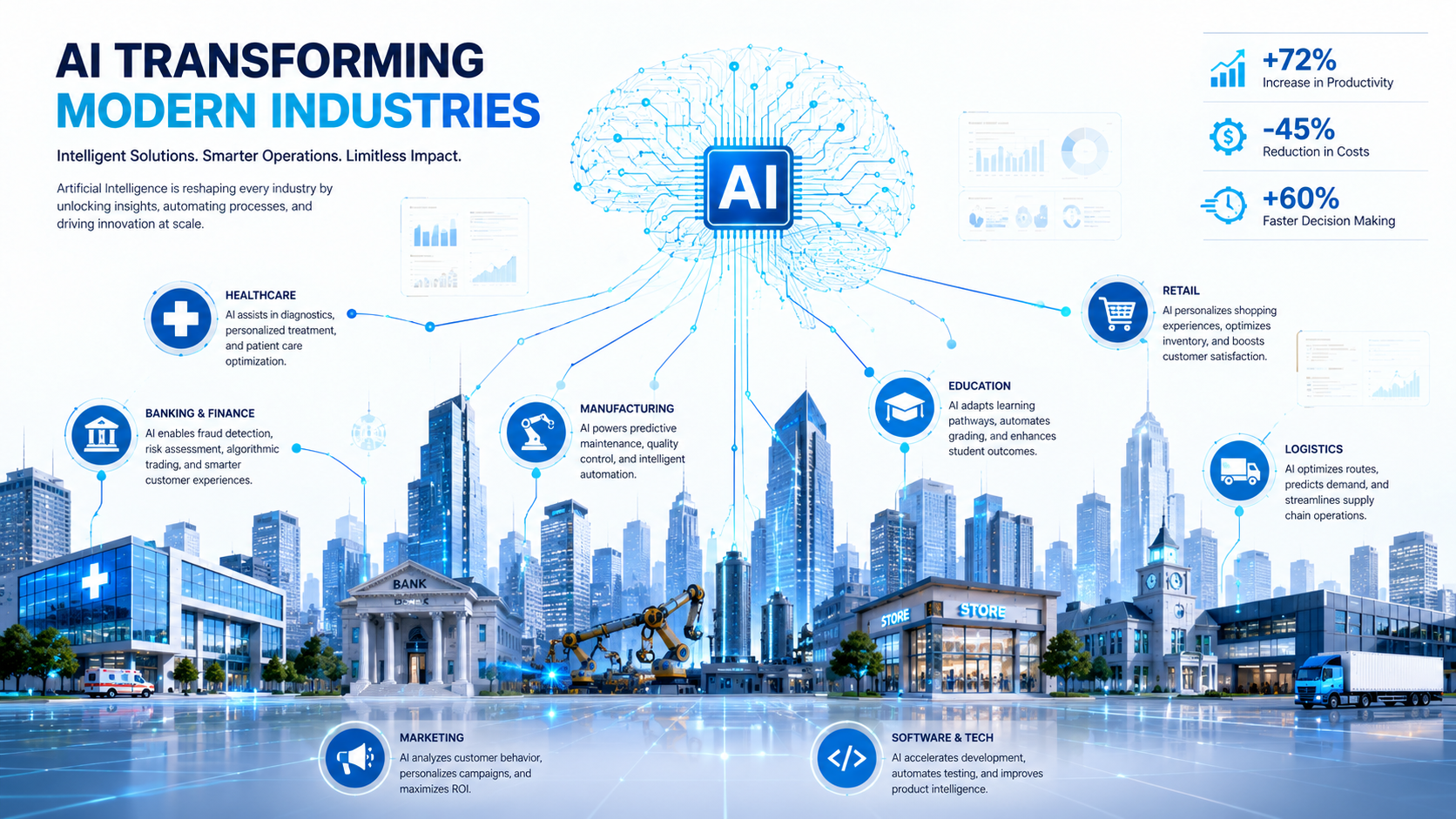
AI and Employment Statistics in 2026
Artificial intelligence is reshaping the global labor market at an unprecedented pace, influencing how organizations hire, invest, and operate. While concerns about job displacement continue to grow, leading research organizations agree that AI will create new opportunities alongside significant workforce transformation. The following statistics provide a data-driven overview of AI adoption, business investment, productivity gains, and employment trends in 2026.
Global AI Adoption :
Artificial intelligence has become a strategic priority for organizations across nearly every industry. According to the World Economic Forum's Future of Jobs Report 2025, the report surveyed more than 1,000 global employers representing over 14 million workers across 55 economies and 22 industry sectors. Employers identified AI, robotics, and information processing technologies as the leading drivers of workplace transformation over the next five years. The report also projects that 22% of today's jobs will be transformed by 2030, reflecting one of the largest workforce shifts in modern history.
Business Investment in AI:
Organizations continue to increase investment in AI to improve productivity and remain competitive. McKinsey & Company reports that AI adoption has moved beyond experimentation, with many organizations integrating generative AI into multiple business functions, including customer service, software development, marketing, operations, and product development. Similarly, PwC's Global AI Jobs Barometer found that industries with greater AI adoption are experiencing stronger business performance and increased investment in AI-enabled technologies to accelerate digital transformation. These findings demonstrate that AI has become a long-term business strategy rather than a short-term technology trend.
Productivity Improvements :
One of AI's greatest business benefits is its ability to improve productivity. PwC reports that sectors with high AI exposure are achieving productivity growth nearly five times faster than sectors with lower AI adoption. The same research found that demand for AI-skilled professionals continues to rise, with employers offering salary premiums for workers who can effectively use AI technologies. These findings suggest that AI is not only improving operational efficiency but also increasing the value of employees who possess AI-related skills.
Job Creation vs. Job Displacement:
Although AI is expected to automate many routine tasks, it is also projected to create millions of new employment opportunities. According to the World Economic Forum, technological change is expected to create 170 million new jobs globally by 2030, while 92 million existing jobs may be displaced, resulting in a net increase of approximately 78 million jobs worldwide. Meanwhile, Goldman Sachs Research estimates that around 300 million full-time jobs globally are exposed to AI automation, but emphasizes that most occupations will be transformed rather than eliminated entirely. Goldman Sachs also expects any increase in unemployment during the AI transition to be relatively modest and temporary as workers move into newly created roles.
Workforce Transformation :
The impact of AI extends beyond job creation and displacement—it is fundamentally changing the skills required in the modern workplace. According to the International Labour Organization (ILO), AI is more likely to augment human work than replace workers outright, particularly in occupations that combine technical expertise with communication, creativity, and decision-making. Likewise, the World Economic Forum projects that workers will increasingly need digital literacy, analytical thinking, AI competency, resilience, and continuous learning to remain competitive in an AI-driven economy. Rather than replacing the workforce, AI is accelerating the transition toward human-AI collaboration, where technology handles repetitive tasks while people focus on innovation, leadership, and complex problem-solving.
of every size, making it one of the most influential technologies shaping employment and workplace transformation in 2026.
Organization | Key Statistic (2026) | Why It Matters |
World Economic Forum (WEF) | 22% of today's jobs are expected to be transformed by 2030. | AI and emerging technologies will reshape job roles rather than eliminate them entirely. |
World Economic Forum (WEF) | 170 million new jobs are projected to be created, while 92 million jobs may be displaced by 2030 (net gain of 78 million jobs). | Technological innovation is expected to create more jobs than it displaces globally. |
World Economic Forum (WEF) | Research is based on surveys of over 1,000 employers representing more than 14 million workers across 55 economies. | The findings are based on one of the world's largest future-of-work studies. |
PwC | AI-intensive industries are experiencing productivity growth nearly 5× faster than industries with lower AI adoption. | Organizations investing in AI are achieving significantly higher productivity gains. |
Goldman Sachs | Around 300 million full-time jobs globally are exposed to AI automation. | AI has the potential to automate portions of many existing occupations. |
Goldman Sachs | The increase in unemployment caused by AI is expected to be modest and temporary during the workforce transition. | Most jobs are expected to evolve rather than disappear as workers adapt to AI technologies. |
AI in the Workplace: How Companies Are Using AI
Artificial intelligence has evolved from an emerging technology into a core component of modern business operations. Organizations across industries are integrating AI into their daily workflows to improve productivity, automate repetitive tasks, enhance decision-making, and deliver better customer experiences.
Rather than replacing employees, AI is increasingly serving as a workplace assistant that helps professionals complete tasks faster and more accurately.
According to IBM's Global AI Adoption Index, businesses are rapidly moving beyond AI experimentation and embedding AI into core business processes to improve operational efficiency and drive innovation. As AI capabilities continue to expand, companies are using intelligent systems not only to reduce manual workloads but also to enable employees to focus on strategic initiatives, creativity, and high-value decision-making.
AI Customer Support :
Customer support is one of the most common applications of artificial intelligence in today's workplace. Companies use AI-powered chatbots, virtual assistants, and conversational AI platforms to provide instant responses to frequently asked questions, resolve common customer issues, process orders, and offer 24/7 assistance across multiple communication channels.
These systems reduce response times, improve customer satisfaction, and allow human support representatives to concentrate on complex inquiries that require empathy, negotiation, and critical thinking.
According to Gartner, conversational AI is becoming an essential component of customer service strategies, helping organizations improve efficiency while maintaining high-quality customer experiences.
AI Coding Assistants :
Software development has been transformed by AI-powered coding assistants that help developers write, review, debug, and optimize code more efficiently. Tools such as GitHub Copilot, Amazon Q Developer, and Google Gemini Code Assist can generate code suggestions, explain programming concepts, detect errors, and automate repetitive development tasks.
These AI assistants accelerate software development by reducing the time required for routine coding activities while allowing developers to focus on system architecture, security, performance optimization, and solving complex engineering challenges. Rather than replacing software engineers, AI coding assistants have become collaborative tools that improve productivity and support faster software delivery.
AI Marketing Automation :
Marketing teams are increasingly using AI to automate campaign management, content creation, customer segmentation, and performance analysis. AI-powered platforms analyze customer behavior, predict purchasing patterns, personalize email campaigns, optimize advertising budgets, and recommend the most effective marketing strategies based on real-time data.
Generative AI also assists marketers in producing blog outlines, social media content, advertising copy, and product descriptions, significantly reducing content production time. While AI improves efficiency and data analysis, successful marketing campaigns still rely on human creativity, brand strategy, and a deep understanding of customer emotions and market trends.
AI Document Processing :
Organizations generate and manage vast amounts of documents every day, making document processing one of the most valuable applications of AI in the workplace. Intelligent document processing (IDP) solutions use optical character recognition (OCR), natural language processing (NLP), and machine learning to extract information from invoices, contracts, financial statements, insurance claims, medical records, and legal documents.
These systems reduce manual data entry, improve accuracy, accelerate document workflows, and support regulatory compliance. Employees can then focus on reviewing complex cases, making informed decisions, and providing value-added services rather than spending hours processing paperwork.
AI Meeting Assistants :
AI-powered meeting assistants have become an essential productivity tool for modern organizations, particularly in hybrid and remote work environments. These tools automatically record meetings, generate real-time transcripts, summarize discussions, identify action items, and distribute meeting notes to participants.
By eliminating the need for manual note-taking, AI allows employees to remain fully engaged during conversations while ensuring that important decisions and follow-up tasks are accurately documented. AI meeting assistants also help organizations improve collaboration, knowledge sharing, and accountability across distributed teams.
AI HR Recruitment Tools :
Human resource departments are leveraging AI to improve recruitment efficiency and enhance the hiring process. AI-powered recruitment platforms assist HR professionals by screening resumes, matching candidates with job requirements, scheduling interviews, answering applicant questions, and identifying potential talent based on skills and experience.
These tools significantly reduce administrative workloads and shorten recruitment cycles, enabling hiring teams to focus on interviewing candidates, assessing cultural fit, and making strategic hiring decisions.
Although AI can streamline candidate sourcing and initial screening, human judgment remains essential for evaluating interpersonal skills, leadership potential, ethical considerations, and long-term organizational compatibility. As a result, AI is transforming recruitment into a more efficient and data-driven process while preserving the critical role of HR professionals in final hiring decisions.
AI in the Workplace: How Companies Are Using AI :
Artificial intelligence has evolved from an emerging technology into a core component of modern business operations. Organizations across industries are integrating AI into their daily workflows to improve productivity, automate repetitive tasks, enhance decision-making, and deliver better customer experiences. Rather than replacing employees, AI is increasingly serving as a workplace assistant that helps professionals complete tasks faster and more accurately.
According to the IBM Global AI Adoption Index, enterprises worldwide are moving beyond AI experimentation and embedding AI into core business functions to improve operational efficiency, accelerate innovation, and gain a competitive advantage.
Similarly, Deloitte's State of Generative AI in the Enterprise reports that organizations are expanding AI investments as generative AI demonstrates measurable value across multiple business functions, from customer service to software development and operations.
AI Customer Support:
Customer support has become one of the most successful applications of artificial intelligence in the workplace. Organizations are deploying AI-powered chatbots, virtual assistants, and conversational AI platforms to answer customer inquiries, resolve common issues, process transactions, and provide 24/7 support.
According to Gartner, conversational AI is rapidly becoming a standard capability in customer service, enabling organizations to improve response times, increase customer satisfaction, and reduce operational costs. While AI effectively manages routine interactions, human agents remain essential for handling complex cases that require empathy, negotiation, and personalized problem-solving.
AI Coding Assistants:
Software development has been significantly enhanced by AI-powered coding assistants that help developers write, review, debug, and optimize code more efficiently. Tools such as GitHub Copilot, Amazon Q Developer, and Google Gemini Code Assist assist programmers by generating code suggestions, explaining programming concepts, identifying potential errors, and automating repetitive coding tasks.
Research published by GitHub has shown that developers using AI coding assistants often complete coding tasks more quickly, allowing them to dedicate more time to software architecture, security, performance optimization, and solving complex engineering challenges.
Instead of replacing software engineers, AI has become a collaborative development partner that improves productivity while preserving the need for human expertise and technical judgment.
AI Marketing Automation:
Artificial intelligence has transformed digital marketing by enabling organizations to automate campaign management, personalize customer experiences, and make data-driven decisions in real time.
Marketing teams now use AI to analyze customer behavior, conduct audience segmentation, optimize advertising budgets, generate marketing content, and improve search engine optimization strategies.
According to Deloitte's State of Generative AI in the Enterprise, marketing is among the business functions experiencing the fastest adoption of generative AI because of its ability to improve efficiency and accelerate content creation. Despite these advancements, successful marketing campaigns continue to depend on human creativity, brand storytelling, strategic planning, and a deep understanding of consumer psychology.
AI Document Processing:
Managing large volumes of business documents has traditionally required significant manual effort, but AI is rapidly transforming this process. Intelligent Document Processing (IDP) solutions use technologies such as Optical Character Recognition (OCR), Natural Language Processing (NLP), and machine learning to extract, classify, validate, and process information from invoices, contracts, financial records, insurance claims, and legal documents.
According to UiPath, AI-powered document processing significantly reduces manual data entry, improves processing accuracy, and accelerates business workflows while enabling employees to focus on reviewing complex information and making informed decisions rather than performing repetitive administrative tasks.
AI Meeting Assistants:
Hybrid and remote work have accelerated the adoption of AI-powered meeting assistants that automatically record meetings, generate transcripts, summarize discussions, identify action items, and distribute meeting notes.
Platforms such as Microsoft 365 Copilot and Google Workspace with Gemini help organizations reduce the administrative burden of meetings while improving collaboration and knowledge sharing across teams.
According to Microsoft's AI and Work research, AI meeting assistants allow employees to remain engaged during discussions without worrying about taking notes, resulting in more productive meetings and improved follow-up on action items.
AI HR Recruitment Tools:
Human resource departments are increasingly using artificial intelligence to improve recruitment efficiency and enhance the hiring process. AI-powered recruitment platforms assist HR professionals by screening resumes, matching candidates with job requirements, scheduling interviews, answering applicant questions, and identifying qualified talent based on skills and experience.
According to the Society for Human Resource Management (SHRM), AI can streamline repetitive recruitment tasks and shorten hiring timelines, allowing recruiters to spend more time evaluating candidates, conducting interviews, and assessing cultural fit. While AI improves recruitment efficiency, final hiring decisions still depend on human judgment, interpersonal evaluation, ethical considerations, and organizational needs. As a result, AI is becoming an important decision-support tool rather than a replacement for HR professionals.
Common Myths About AI Replacing Jobs
As artificial intelligence becomes more capable and widely adopted, misconceptions about its impact on employment continue to spread. Headlines predicting the end of human work often generate fear and uncertainty, but they rarely reflect the full picture.
In reality, AI is transforming how work is performed rather than eliminating the need for people altogether. Leading organizations, including the World Economic Forum (WEF), International Labour Organization (ILO), McKinsey & Company, and PwC, consistently conclude that AI is more likely to automate specific tasks, reshape job roles, and create new career opportunities than replace entire occupations. Understanding the facts behind these common myths can help individuals and organizations prepare for an AI-driven future with confidence rather than fear.
Myth #1 – AI Will Replace Everyone :
One of the most widespread misconceptions is that artificial intelligence will eventually replace every human worker. While AI is highly effective at automating repetitive, predictable, and data-intensive tasks, it cannot fully replicate human creativity, emotional intelligence, ethical judgment, leadership, or complex decision-making.
According to the World Economic Forum's Future of Jobs Report 2025, AI and other emerging technologies are expected to transform millions of jobs, but they are also projected to create 170 million new jobs globally by 2030, while displacing 92 million, resulting in a net gain of approximately 78 million jobs. Rather than eliminating the workforce, AI is changing the nature of work by encouraging collaboration between people and intelligent technologies.
Myth #2 – AI Never Makes Mistakes :
Although AI systems can analyze large volumes of information quickly and accurately, they are not infallible. AI models learn from the data they are trained on, meaning they can produce inaccurate information, biased recommendations, outdated responses, or fabricated content—often referred to as "AI hallucinations." Research from IBM and Google DeepMind emphasizes that AI systems require continuous monitoring, high-quality data, and human oversight to ensure reliable and ethical outcomes. In critical industries such as healthcare, finance, law, and engineering, professionals remain responsible for verifying AI-generated insights before making important decisions. AI should therefore be viewed as a decision-support tool rather than an independent decision-maker.
Myth #3 – Only Tech Jobs Are Affected :
Many people believe that AI only impacts software developers, data scientists, and other technology professionals. In reality, AI is transforming virtually every industry, including healthcare, finance, education, manufacturing, retail, marketing, logistics, agriculture, and legal services.
According to PwC's Global AI Jobs Barometer, AI is influencing occupations across the economy by automating repetitive tasks, improving productivity, and changing the skills employers seek. Customer service representatives, accountants, marketers, teachers, healthcare workers, and supply chain professionals are all experiencing changes in how they perform their daily responsibilities. The impact of AI extends far beyond the technology sector, making digital literacy and AI-related skills increasingly valuable across all professions.
Myth #4 – AI Eliminates the Need for Humans :
Perhaps the biggest misconception is that AI removes the need for human workers altogether. In practice, organizations are increasingly adopting a model of human-AI collaboration, where AI handles repetitive, time-consuming tasks while employees focus on responsibilities requiring creativity, strategic thinking, communication, leadership, empathy, and innovation.
McKinsey & Company reports that organizations achieve the greatest value from AI when employees and intelligent systems work together rather than independently. Similarly, the International Labour Organization (ILO)highlights that AI is more likely to augment human capabilities than replace them entirely. The future workplace will therefore depend not on humans competing with AI, but on professionals who can effectively use AI to improve productivity, solve complex problems, and deliver greater value to customers and organizations.
Future Concerns :
As artificial intelligence continues to evolve beyond 2026, its impact on employment will extend far beyond simple job automation. The greatest challenges will include workforce displacement, widening skills gaps, income inequality, ethical concerns, data privacy risks, and the need for effective AI governance.
Organizations will increasingly seek employees who can work alongside AI, making continuous learning, digital literacy, and adaptability essential for long-term career success. Governments and businesses will also face growing pressure to develop policies that promote responsible AI adoption, protect workers, and ensure fair access to new opportunities.
While AI is expected to create new industries and high-value careers, the pace of technological change may outstrip workforce preparedness, making re-skilling and lifelong learning critical priorities. Ultimately, the future of work will depend not on whether AI replaces humans, but on how successfully society balances innovation, regulation, and human-centered collaboration in an AI-driven economy.
Conclusion :
Artificial intelligence is transforming the workplace, but it is not replacing all human jobs. Instead, AI is automating repetitive tasks, improving productivity, and changing how people work across industries. At the same time, it is creating new career opportunities and increasing demand for skills such as creativity, critical thinking, leadership, and emotional intelligence.
According to leading organizations such as the World Economic Forum (WEF), McKinsey & Company, PwC, Goldman Sachs, and the International Labour Organization (ILO), the future of work will be shaped by collaboration between humans and AI rather than competition. Professionals who embrace AI, continuously upskill, and adapt to new technologies will be better positioned for long-term career success.
Ultimately, the answer to "Will AI Replace Human Jobs in 2026?" is not entirely. AI will transform many roles, automate specific tasks, and create new opportunities, but human expertise, innovation, and decision-making will remain essential in the workplace of the future.
Official Reference Links
Industry Reports & Research
- Boston Consulting Group (BCG). AI Will Reshape More Jobs Than It Replaces (2026). Available at: https://www.bcg.com/
- World Economic Forum (WEF). The Future of Jobs Report 2025. Available at: https://www.weforum.org/reports/the-future-of-jobs-report-2025
- PwC. Global AI Jobs Barometer. Available at: https://www.pwc.com/
- Goldman Sachs Research. The Potentially Large Effects of Artificial Intelligence on Economic Growth. Available at: https://www.goldmansachs.com/insights/
- International Labour Organization (ILO). Generative AI and Jobs: A Global Analysis of Potential Effects on Job Quantity and Quality. Available at: https://www.ilo.org/
- OECD. Artificial Intelligence and the Future of Work. Available at: https://www.oecd.org/ai/
Enterprise AI & Business Adoption
- IBM. Global AI Adoption Index. Available at: https://www.ibm.com/reports/ai-adoption
- Deloitte. State of Generative AI in the Enterprise. Available at: https://www2.deloitte.com/global/en/pages/consulting/articles/state-of-generative-ai-in-the-enterprise.html
- Gartner. Customer Service and Conversational AI. Available at: https://www.gartner.com/en/customer-service-support
- SHRM (Society for Human Resource Management). Artificial Intelligence in HR. Available at: https://www.shrm.org/topics-tools/topics/artificial-intelligence
AI Productivity & Workplace Tools
- GitHub Research. Quantifying GitHub Copilot's Impact on Developer Productivity and Happiness. Available at: https://github.blog/news-insights/research/research-quantifying-github-copilots-impact-on-developer-productivity-and-happiness/
- Microsoft. Microsoft 365 Copilot. Available at: https://www.microsoft.com/en-us/microsoft-365/copilot
- Google. Gemini for Google Workspace. Available at: https://workspace.google.com/gemini/
- UiPath. Intelligent Document Processing. Available at: https://www.uipath.com/product/document-understanding
Industry News & Analysis
- Associated Press (AP). A Grim Job Outlook Meets a Scrappy Workforce as Administrative Assistants Harness AI.Available at: https://apnews.com/
- TechTarget. Is AI Replacing Jobs? How 17 Job Types Feel the Effects. Available at: https://www.techtarget.com/
Academic Research
- arXiv. Generative AI and the Reorganization of Labor Demand. Available at: https://arxiv.org/
- arXiv. Beyond Automation: Redesigning Jobs with LLMs to Enhance Productivity. Available at: https://arxiv.org/
Frequently Asked Questions (FAQs)
1. Will AI replace all jobs in 2026?
No. AI is not expected to replace all human jobs in 2026. Instead, it is automating repetitive and routine tasks while transforming how many jobs are performed. Most experts agree that AI will augment human work rather than eliminate entire professions, creating new opportunities alongside workforce changes.
2. Which jobs are most at risk from AI?
Jobs involving repetitive, predictable, and data-driven tasks are the most vulnerable to AI automation. Examples include data entry clerks, customer service representatives, transcriptionists, bookkeeping clerks, payroll administrators, and certain administrative support roles. In many cases, AI automates specific tasks rather than replacing entire occupations.
3. Which jobs are safest from AI?
Jobs requiring creativity, emotional intelligence, critical thinking, leadership, and hands-on expertise are considered the safest from AI automation. These include healthcare professionals, teachers, psychologists, skilled tradespeople, entrepreneurs, business leaders, and creative directors.
4. Is AI creating more jobs than it removes?
Yes, current research suggests AI will create new employment opportunities while displacing some existing roles. According to the World Economic Forum, technological advancements are expected to create 170 million new jobs and displace 92 million jobs globally by 2030, resulting in a net gain of approximately 78 million jobs.
5. Can AI replace software developers?
AI can assist software developers by generating code, debugging applications, and automating repetitive programming tasks. However, software engineers remain essential for system architecture, problem-solving, security, innovation, and building complex applications. AI is more likely to enhance developer productivity than replace professional programmers.
6. Will AI replace digital marketers?
No. AI is transforming digital marketing by automating tasks such as content generation, keyword research, campaign optimization, and customer analytics. However, successful marketing still relies on human creativity, strategic planning, storytelling, branding, and understanding customer behavior.
7. What new jobs will AI create?
AI is expected to create new careers such as AI engineers, machine learning specialists, AI trainers, prompt engineers, AI ethics consultants, AI auditors, automation specialists, data scientists, cybersecurity analysts, and human-AI collaboration managers. Demand for these roles is expected to grow as AI adoption increases.
8. How can I protect my career from AI?
The best way to prepare for an AI-driven future is to embrace continuous learning and develop AI-related skills. Learning to use AI tools, improving critical thinking, communication, creativity, leadership, and staying updated with emerging technologies will help professionals remain competitive in the evolving job market.
9. What skills are most valuable in the AI era?
The most valuable skills combine technical knowledge with uniquely human capabilities. These include critical thinking, creativity, emotional intelligence, communication, leadership, adaptability, collaboration, ethical decision-making, digital literacy, and the ability to work effectively with AI-powered tools.
10. What is the future of AI and employment?
The future of employment is expected to focus on collaboration between humans and AI rather than competition. While AI will automate repetitive tasks and transform many existing roles, human expertise, innovation, ethical judgment, and interpersonal skills will remain essential. Professionals who continuously upskill and adapt to new technologies will be best positioned for long-term career success.