 services@aitchsoft.com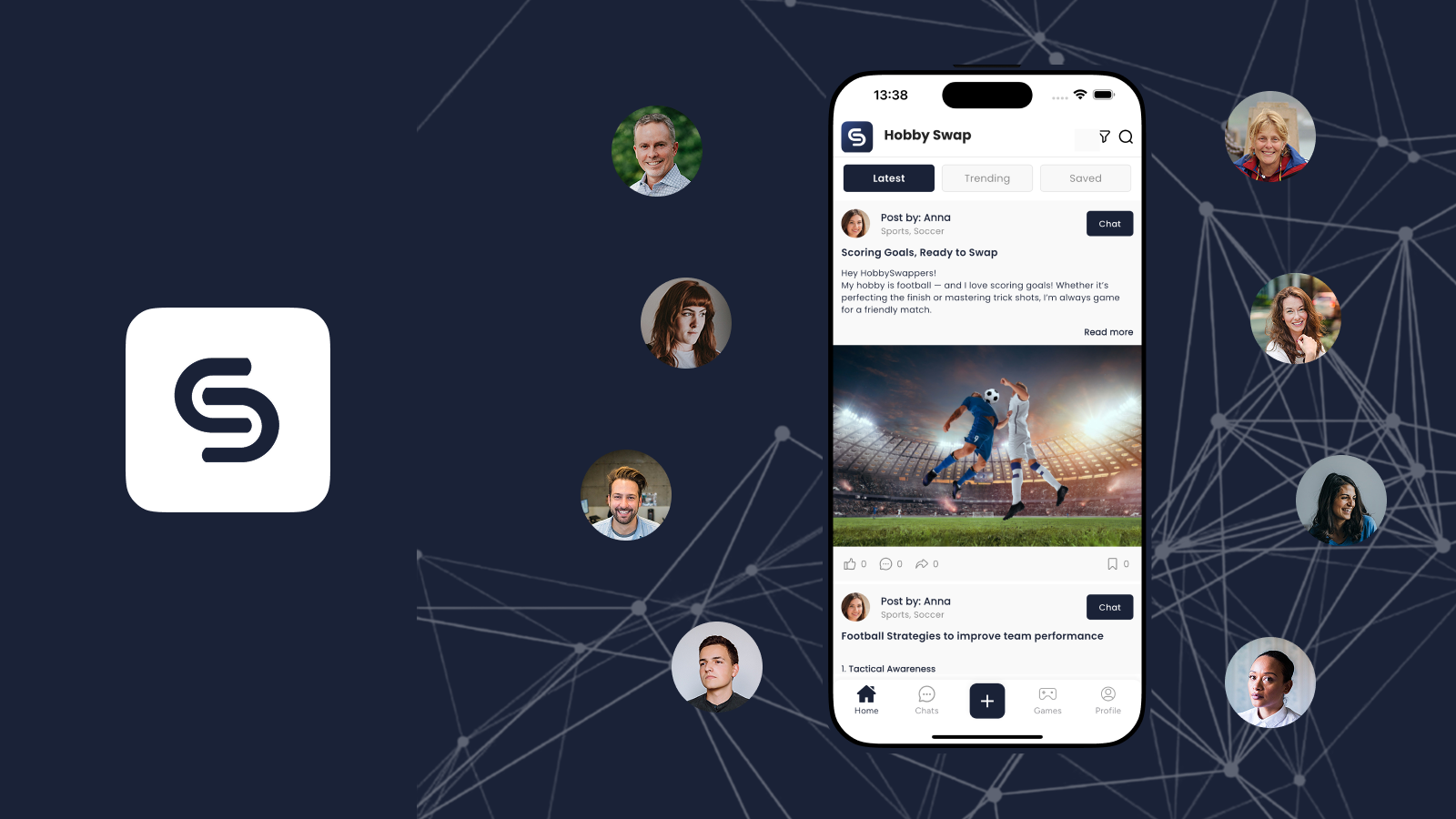
HobbySwap: Building a Social Platform Around Human Passions
A Product Development and Innovation Case Study
Abstract:
In an era dominated by content consumption, millions of people spend hours scrolling through social media feeds every day. Yet despite unprecedented digital connectivity, many individuals struggle to find meaningful relationships centered around their real-world interests and hobbies.
This case study explores the journey of HobbySwap, a platform created to bridge that gap. It follows the founders' journey from identifying a market opportunity through online research to developing a Minimum Viable Product (MVP), overcoming product design challenges, redefining the platform's core value proposition, and preparing for future growth.
The case highlights the strategic decisions, product development challenges, and lessons learned while building a platform designed to transform hobbies from personal interests into social connections.
Introduction
In early 2025, while researching online communities and social behavior trends, the founders observed an interesting contradiction.
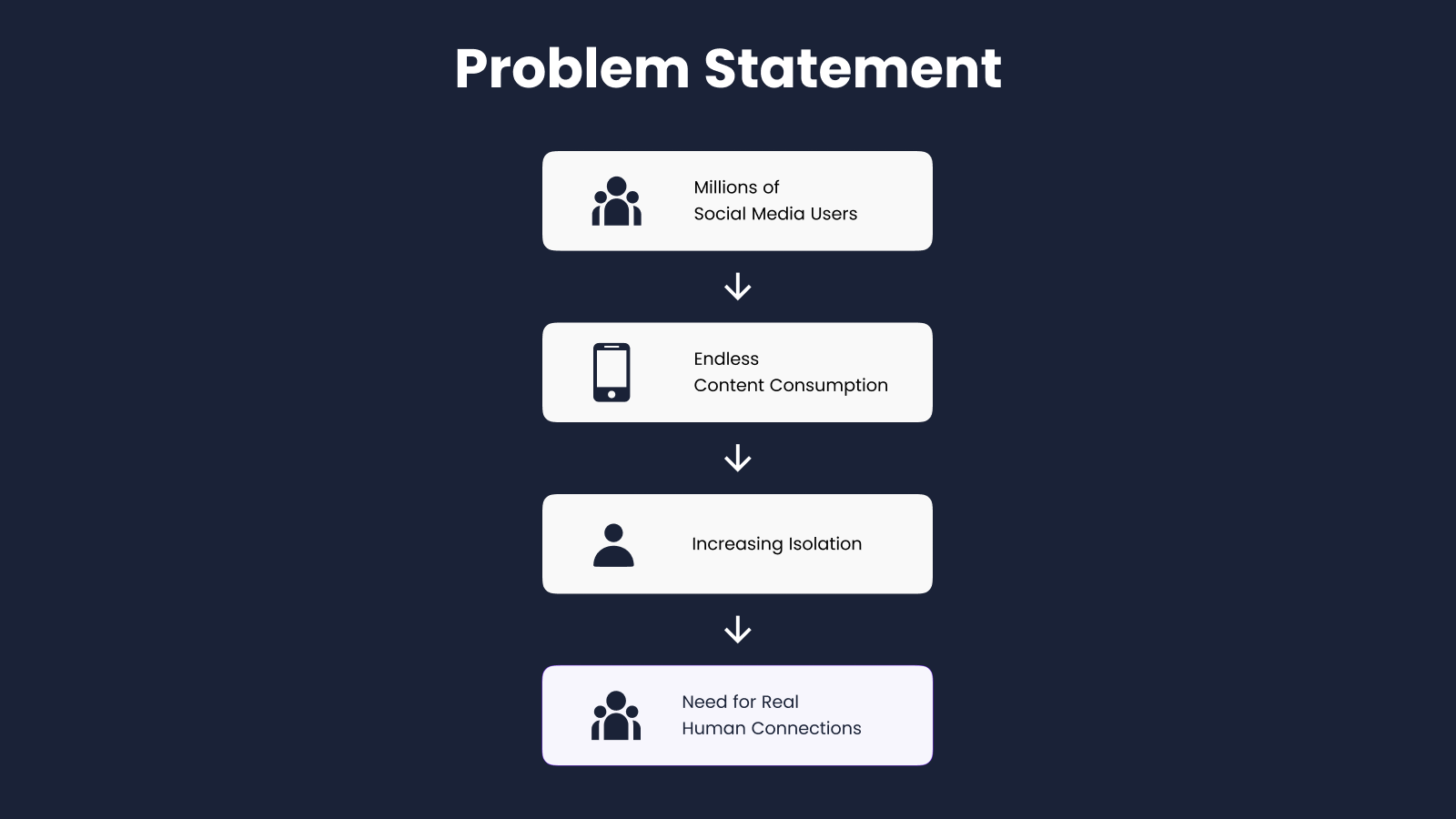
Social media platforms had never been larger. Billions of users actively consumed content every day, yet many individuals expressed feelings of isolation when it came to pursuing their hobbies and personal interests.
Across Reddit communities, online forums, and discussion boards, people frequently discussed challenges such as:
- Finding others who shared their interests.
- Learning new hobbies from experienced individuals.
- Building meaningful friendships around common passions.
- Staying motivated while pursuing hobbies alone.
The founders noticed a recurring pattern.
People had hobbies.
People wanted to explore new hobbies.
People wanted to connect with others.
However, existing platforms were primarily designed for content consumption rather than hobby-based relationships.
This observation sparked a fundamental question:
What if hobbies themselves became the foundation for social interaction?
The answer would eventually become HobbySwap.
Industry Background
The social networking landscape has evolved dramatically over the last decade.
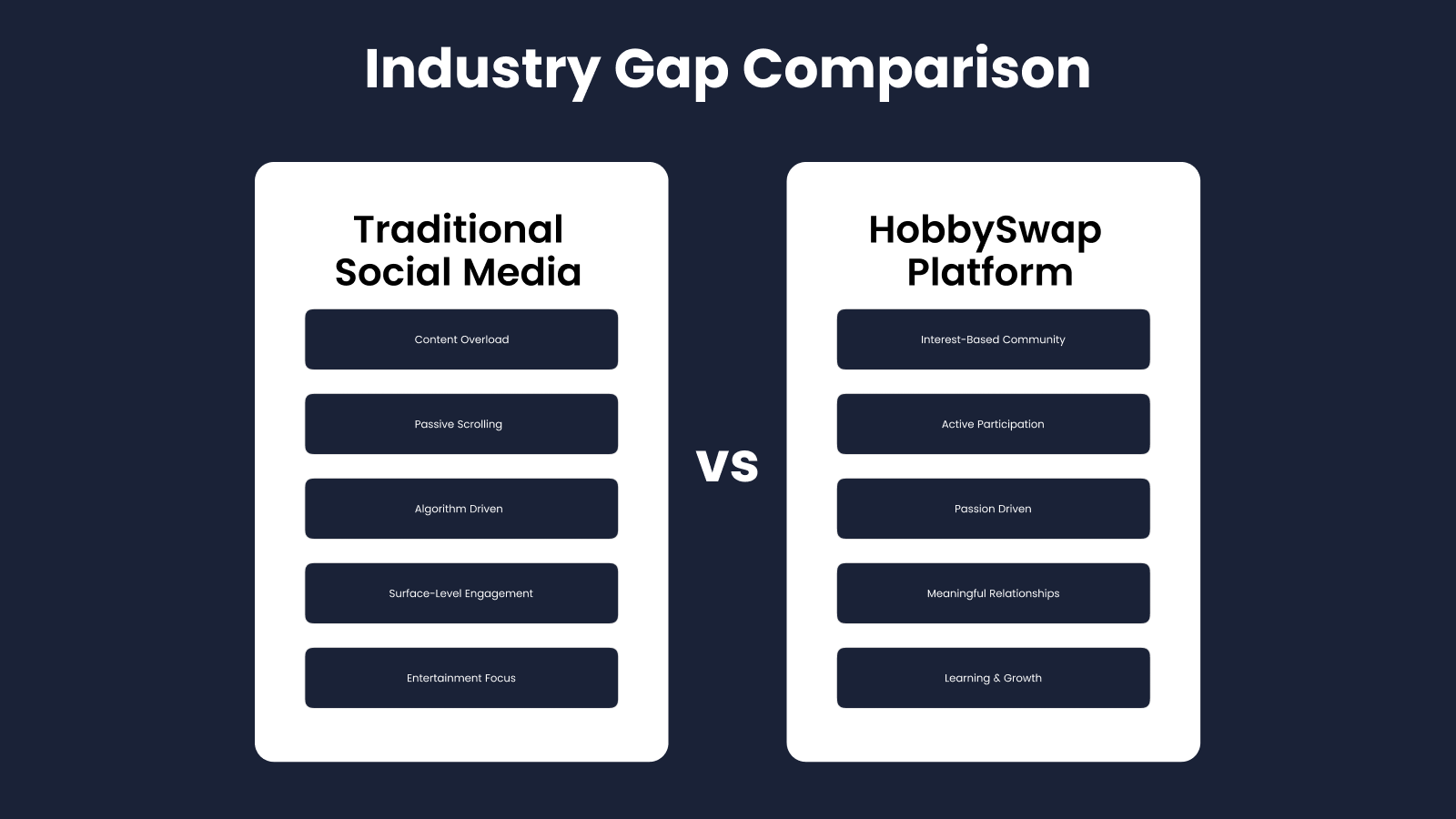
Platforms such as Instagram, TikTok, Facebook, and X transformed the way people communicate and consume information. However, their business models were primarily optimized for attention and engagement.
Users could easily watch hobby-related content.
They could follow creators.
They could join interest-based groups.
Yet discovering individuals willing to actively share, teach, learn, and collaborate remained surprisingly difficult.
The founders believed that a gap existed between content consumption and real-world hobby participation.
While countless platforms connected people around entertainment, very few were designed specifically to connect people through shared interests and skill exchange.
This gap represented an opportunity.
Identifying the Opportunity
The founders conducted extensive research to validate the problem.
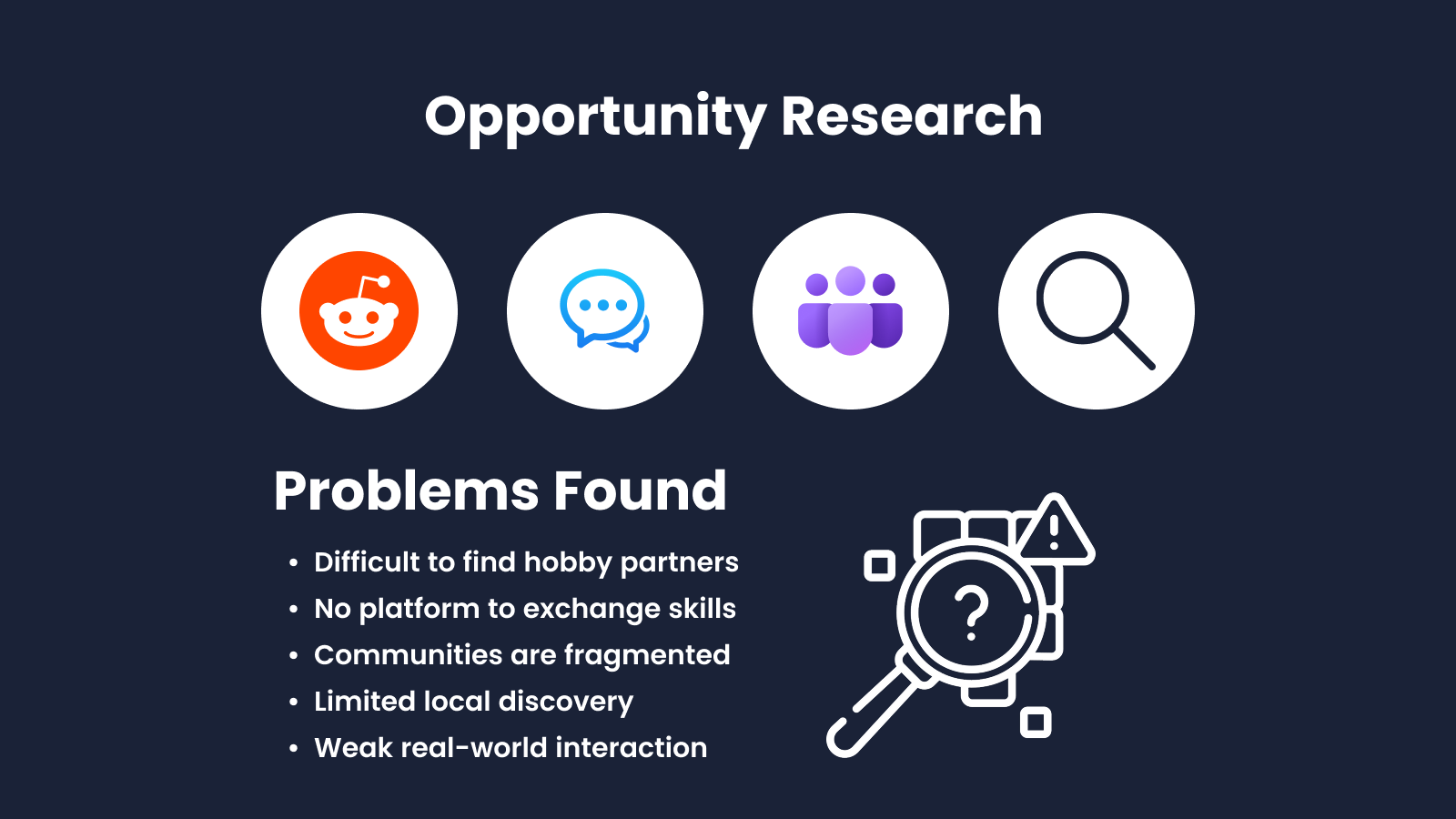
Multiple Reddit discussions revealed similar frustrations among hobby enthusiasts.
Users frequently mentioned:
- Difficulty finding local hobby partners.
- Lack of accountability when learning new skills
- Challenges connecting with people who share niche interests.
- Limited opportunities to exchange knowledge directly with others.
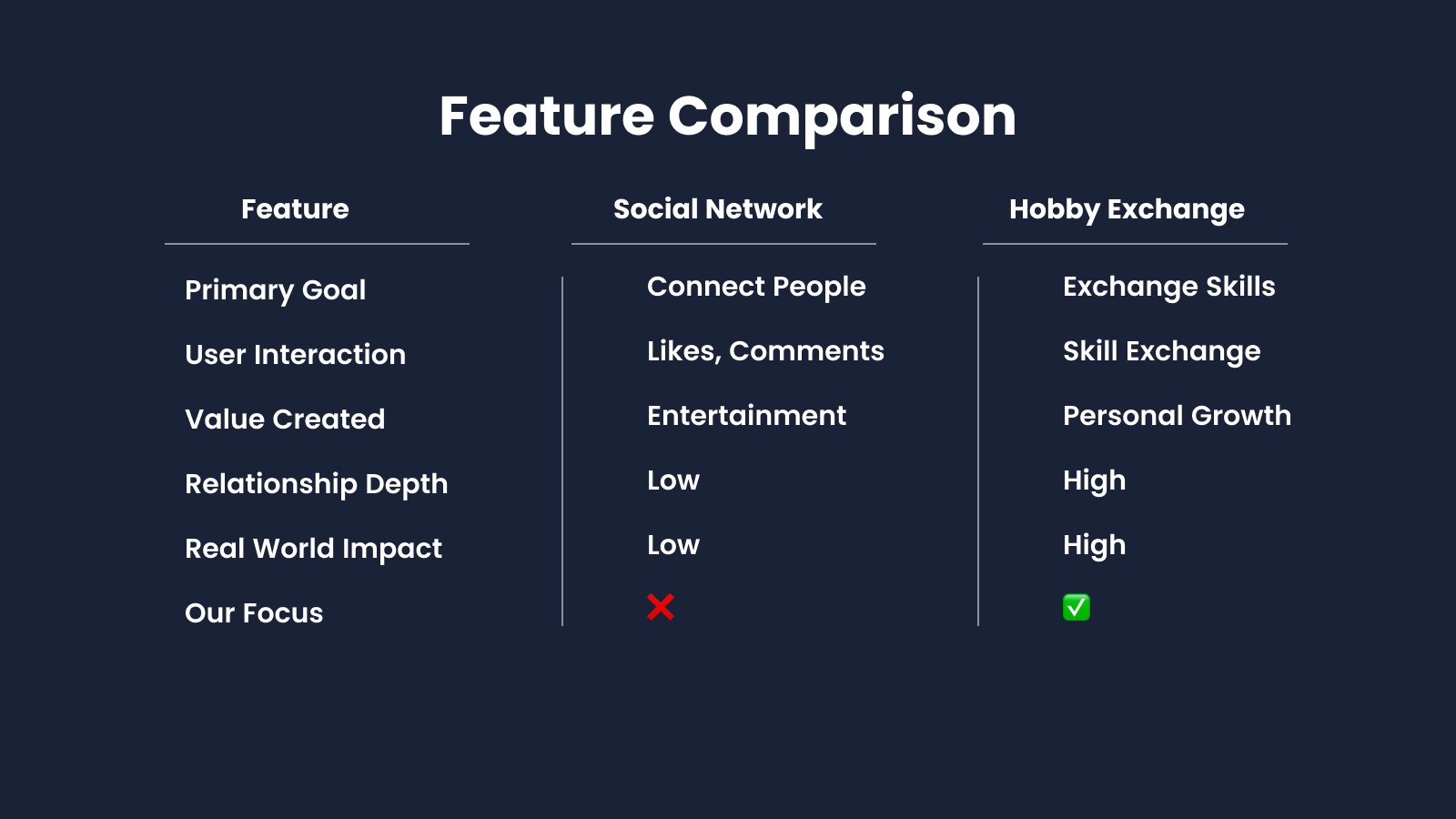
Research suggested that people were not necessarily looking for more content.
Instead, they were seeking participation.
The founders concluded that a successful solution would need to:
- Help users discover hobbies.
- Connect users with like-minded individuals.
- Enable meaningful interaction.
- Encourage knowledge sharing.
- Facilitate real-world relationships.
The concept became known internally as "HobbySwap."
Strategic Decision #1:
What Should HobbySwap Become?
With the opportunity identified, the team faced its first major strategic decision.
What exactly should HobbySwap be?
Several directions were considered.
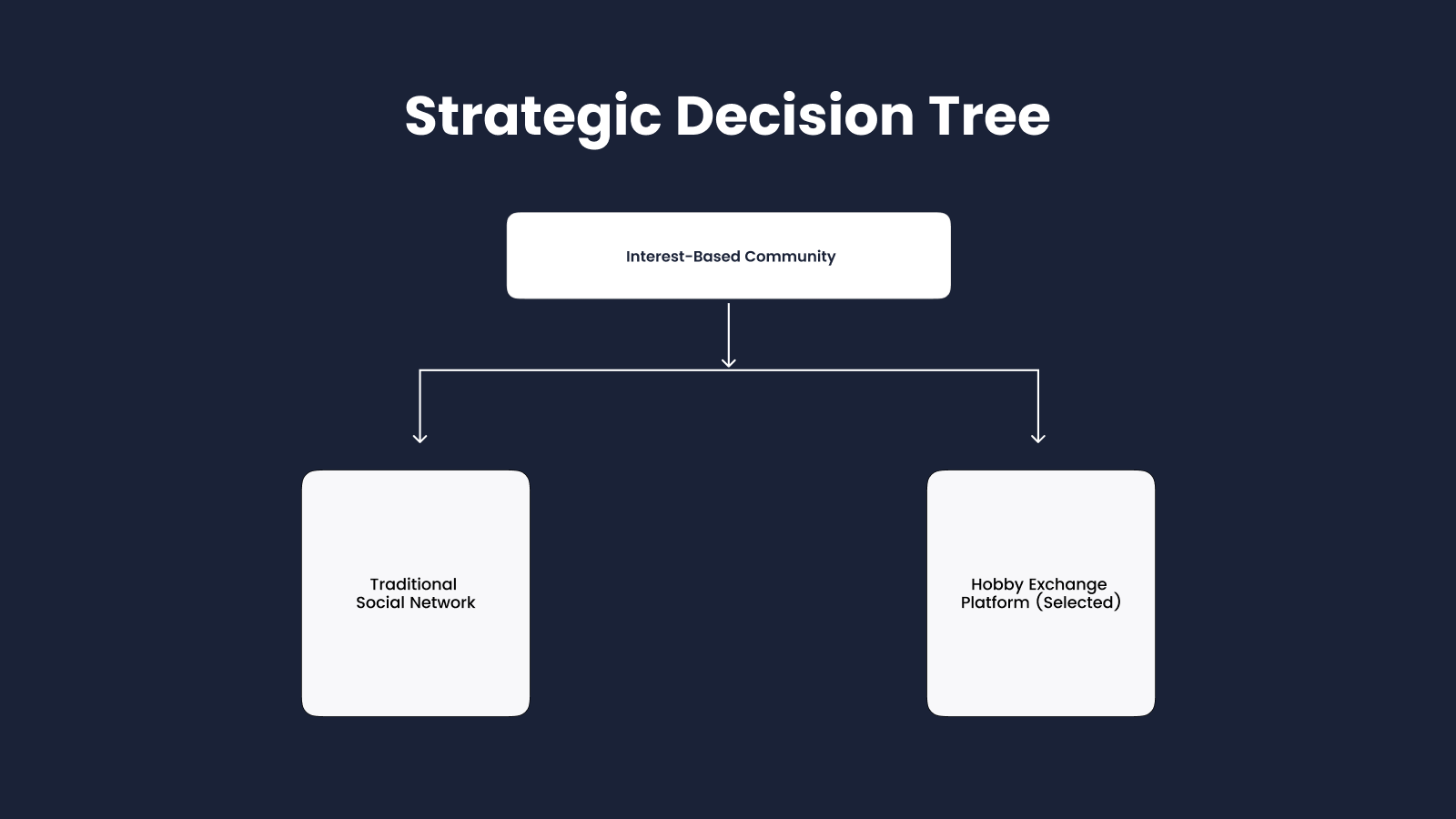
Option 1: Traditional Social Network
A hobby-focused social network would allow users to create profiles, publish posts, and follow other hobby enthusiasts.
Advantages:
- Familiar user experience.
- Lower adoption barrier.
- Faster development.
Challenges:
- Risk of becoming another generic social platform.
- Difficult differentiation.
Option 2: Learning Marketplace
Users could teach hobbies and potentially monetize their expertise.
Advantages:
- Revenue opportunities.
- Strong value proposition.
Challenges:
- Increased complexity.
- Trust and payment infrastructure requirements.
- Higher barriers for users.
Option 3: Hobby Exchange Platform
Users could connect through hobbies and exchange knowledge, experiences, and skills.
Advantages:
- Unique positioning.
- Community-driven growth.
- Focus on collaboration rather than consumption.
Challenges:
- New concept requiring user education.
- More complex interaction design.
After evaluating these options, the founders chose the third approach.
The decision would define the platform's identity.
Designing the MVP
The team adopted a lean product development strategy.
Rather than building every feature immediately, they focused on creating a Minimum Viable Product capable of validating core assumptions.
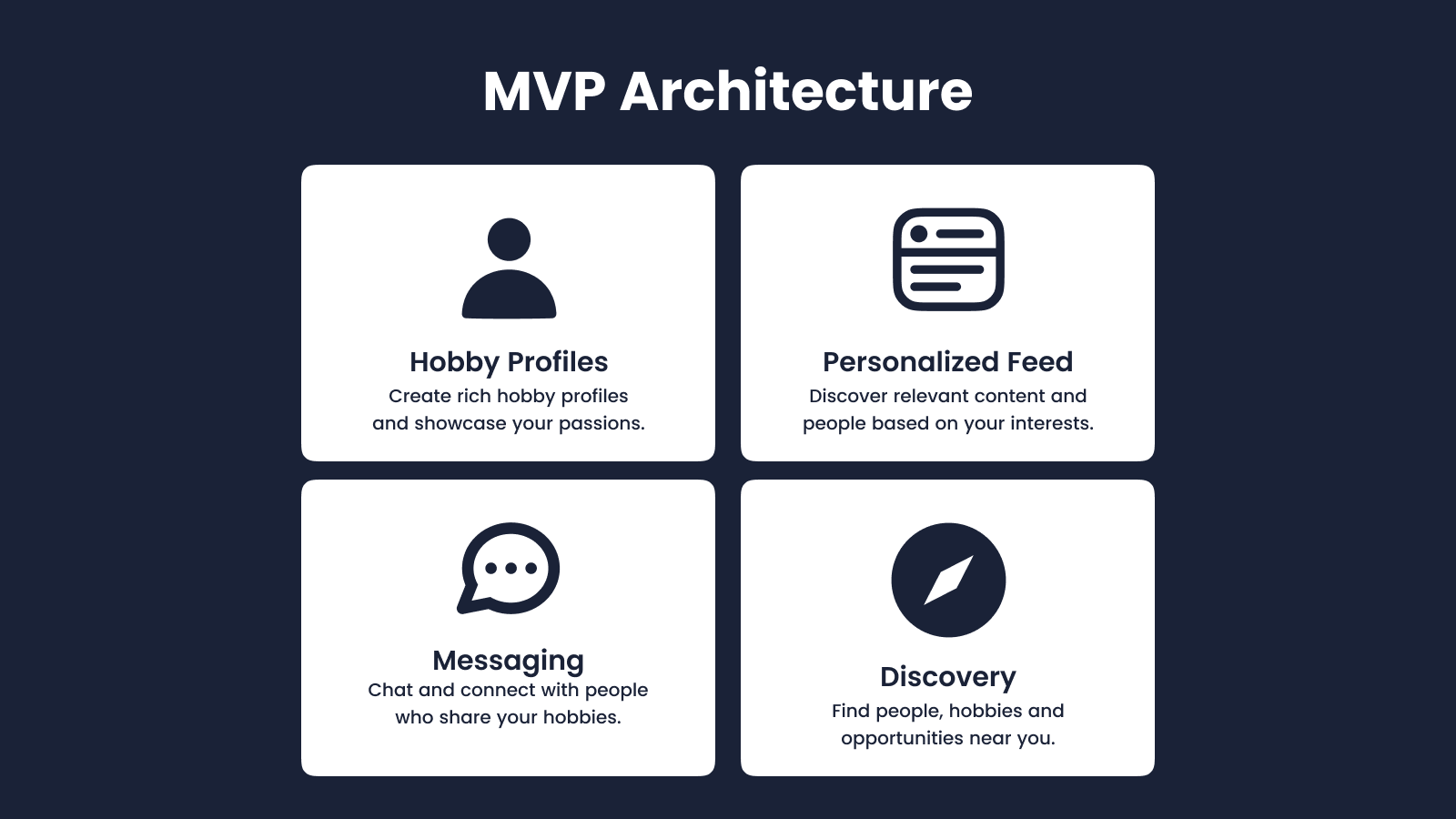
The MVP centered around four pillars:
Hobby-Based Profiles
Users could showcase their interests and passions.
Personalized Feed
Content would be organized around hobbies rather than generic social interactions.
Real-Time Communication
Users could directly connect with one another.
Hobby Discovery
The platform would help users discover new interests and communities.
The objective was simple:
Determine whether users would actively engage with a hobby-focused social experience.
Technology and Development Approach
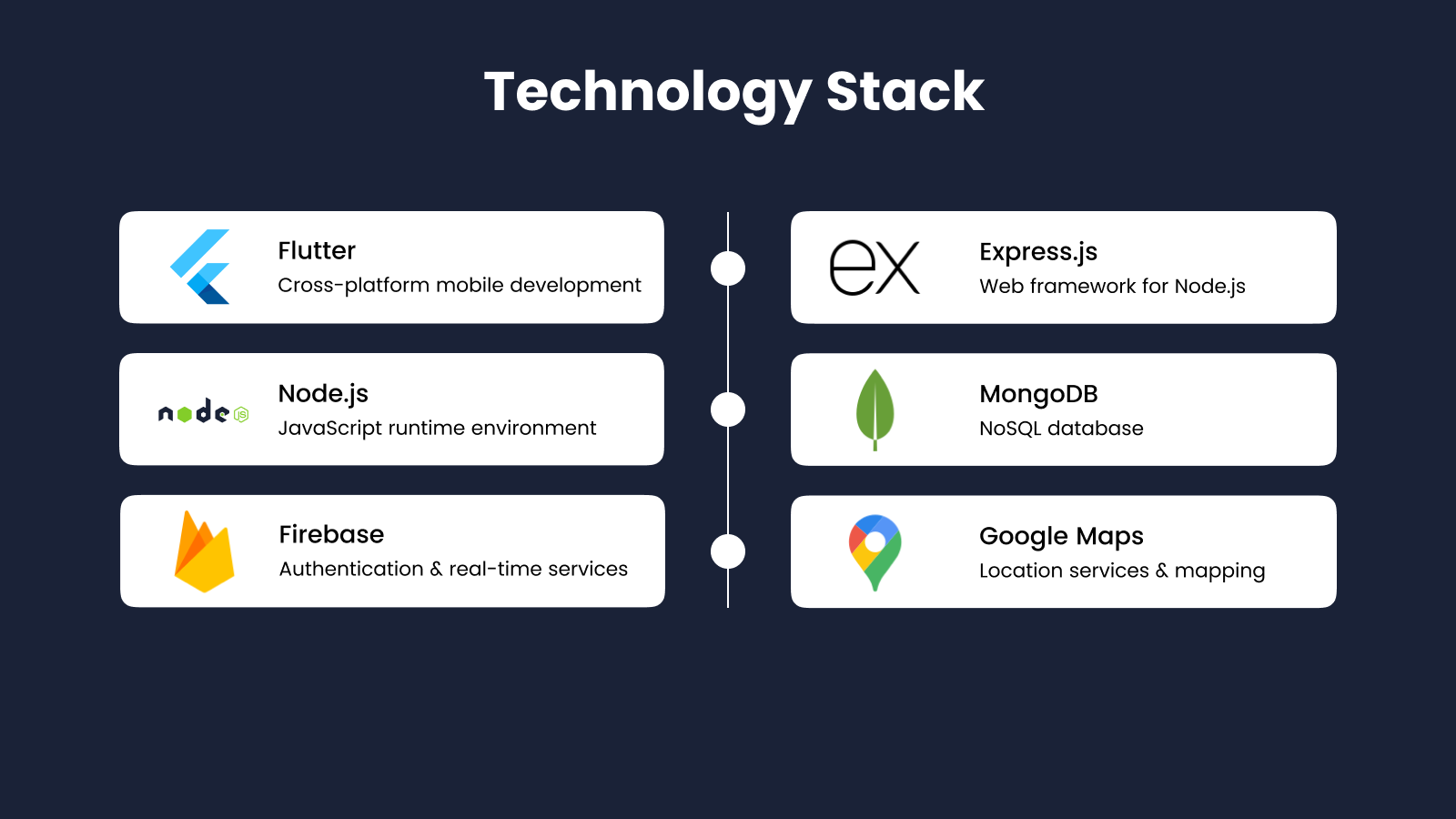
To accelerate development while maintaining scalability, the team selected a modern technology stack.
Mobile Application
- Flutter
Backend Infrastructure
- Node.js
- Express.js
Database
- MongoDB
- Mongoose
Additional Integrations
- Firebase Notifications
- Real-Time Messaging
- Google Maps Services
The decision allowed rapid iteration while maintaining flexibility for future feature expansion.
Early Product Challenges
Development progressed steadily.
The feed functioned.
Profiles worked.
Users could communicate.
Content could be shared.
However, an important concern began to emerge.
Although users could engage with hobby-related content, the platform was not yet creating the level of meaningful interaction envisioned by the founders.
The product felt functional.
But it lacked a defining experience.
The team faced a critical question:
What makes HobbySwap fundamentally different from existing social platforms?
The answer would lead to the most important product decision in the company's early history.
Strategic Decision #2:
The Missing Swap Experience
As internal testing continued, the founders identified a significant weakness.
Users could post about hobbies.
Users could message each other.
Users could discover hobby communities.
Yet the actual concept of "swapping" hobbies was largely absent.
This realization created a strategic dilemma.
The platform's name promised something unique.
The product experience did not yet fully deliver it.
The team recognized that simply connecting users was insufficient.
There needed to be a mechanism for exchanging knowledge and experiences.
This insight triggered a major redesign effort.
Reimagining Hobby Exchange
The founders returned to the original vision.
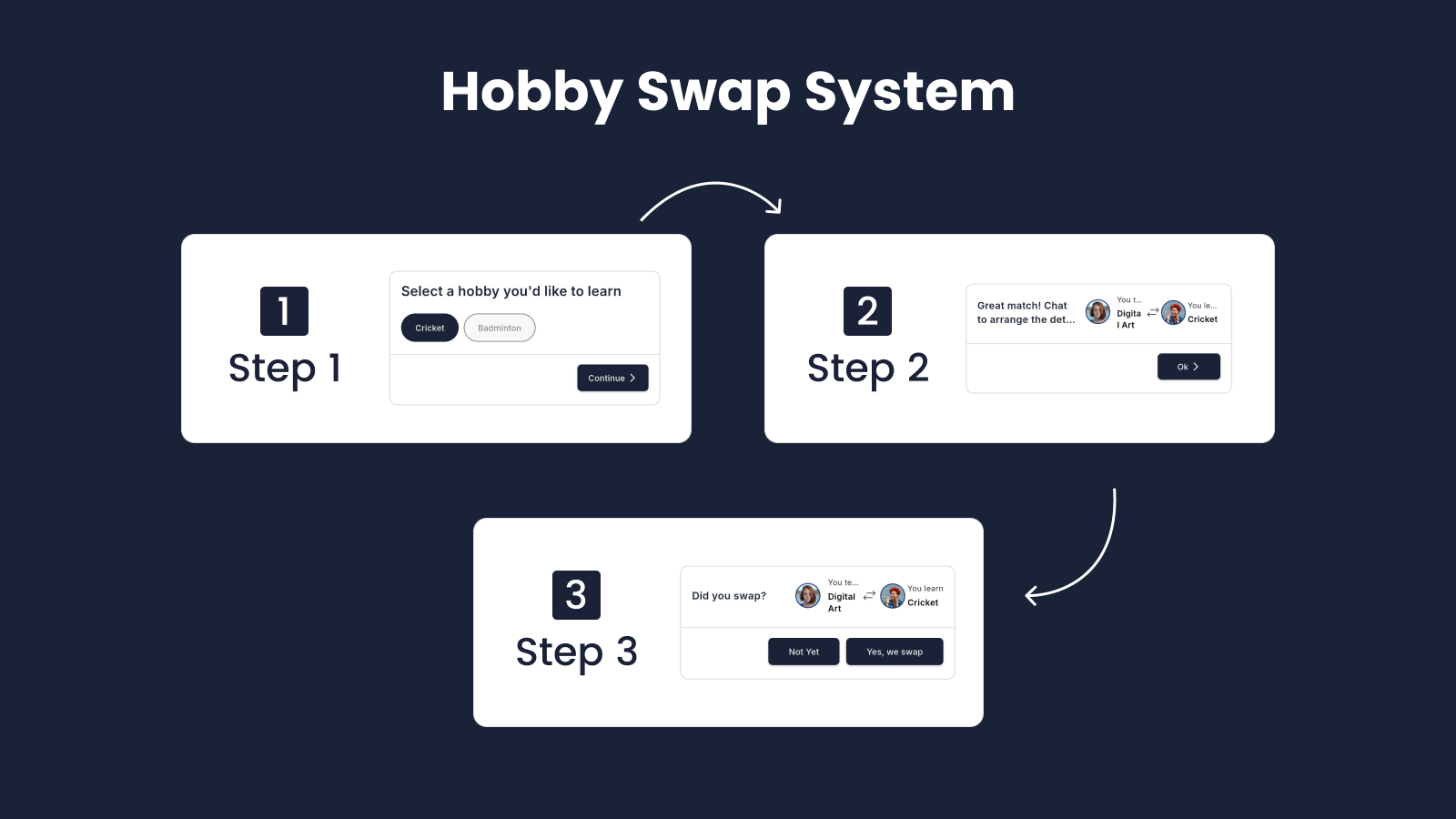
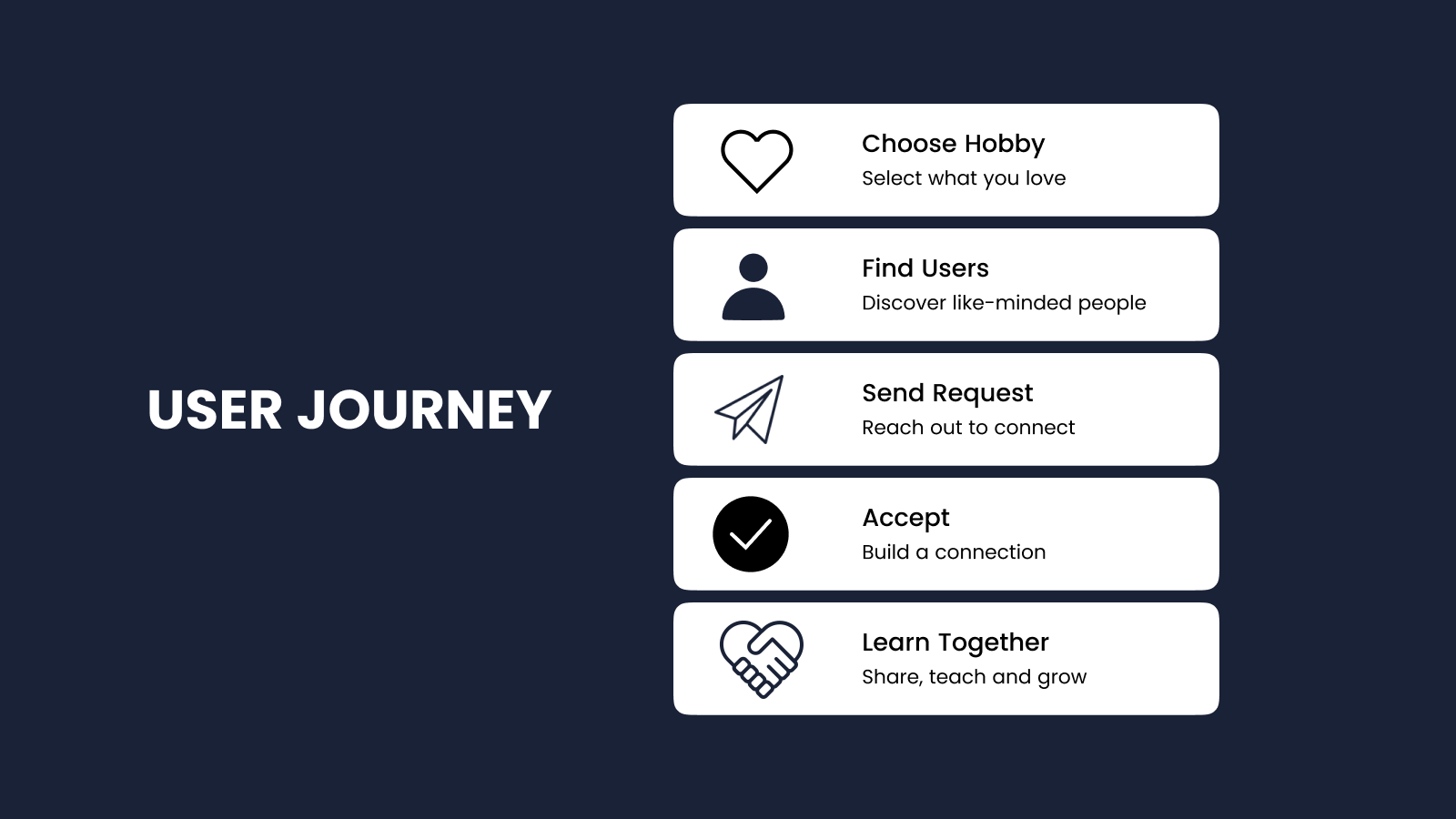
The concept evolved into a structured hobby exchange system.
Instead of merely sending messages, users could initiate interactions centered around skill sharing.
For example:
- A guitarist could offer beginner lessons.
- A photographer could exchange photography knowledge.
- A gardener could teach planting techniques.
- A fitness enthusiast could share workout strategies.
The platform would encourage reciprocal learning rather than passive interaction.
This feature significantly strengthened the product's differentiation.
However, implementing it introduced new design and technical challenges.
Location as a Growth Strategy
Another challenge emerged during development.
Meaningful relationships often require proximity.
The team believed that hobby-based connections should extend beyond digital interactions.
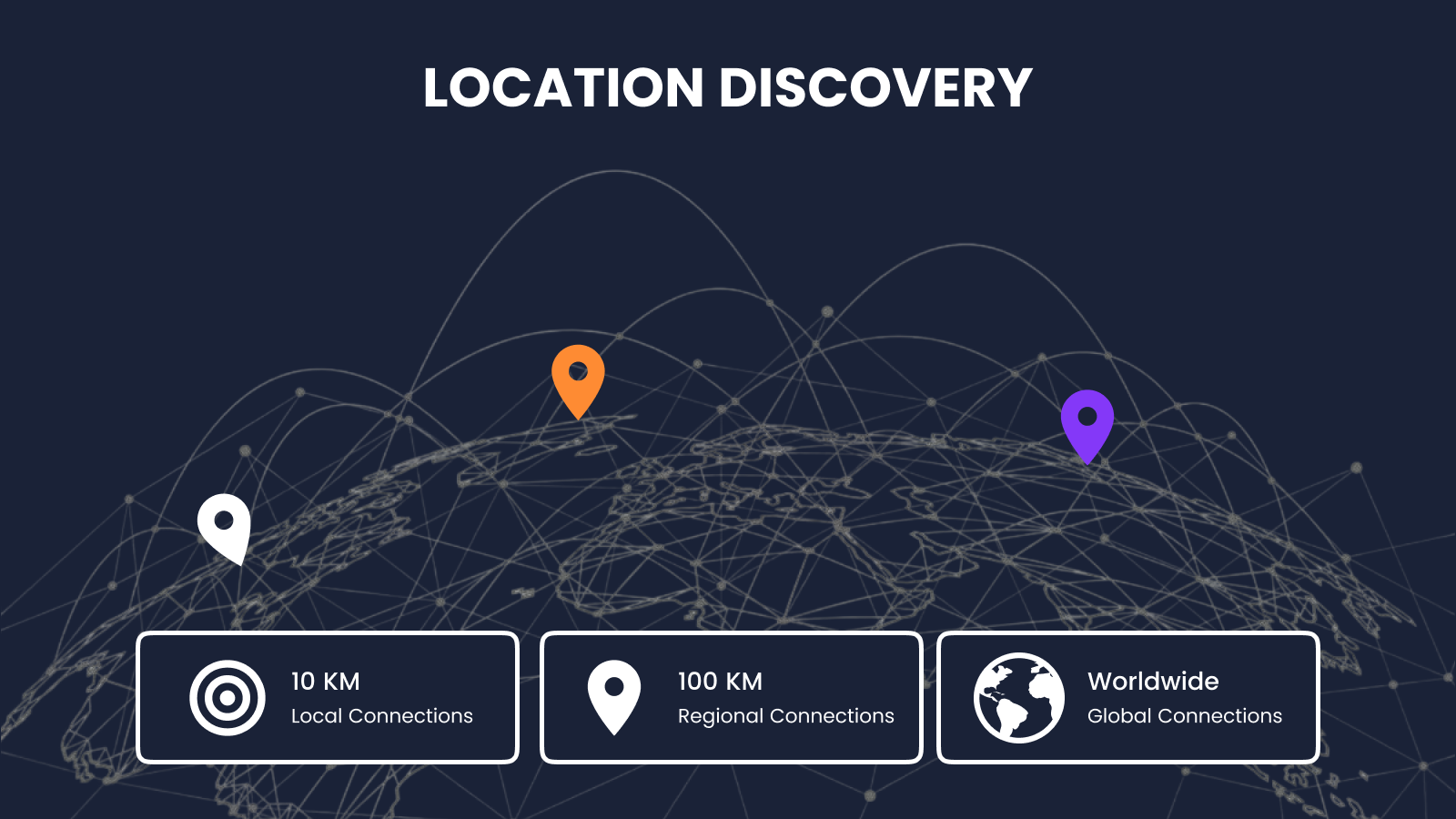
To support this vision, location-based discovery was introduced.
Users could explore hobby enthusiasts within:
- 10 Kilometer Radius
- 100 Kilometer Radius
- Worldwide Discovery
Google Maps integration enabled geographically relevant recommendations and increased the likelihood of real-world interaction.
The feature transformed HobbySwap from a purely digital network into a platform capable of facilitating local communities.
Product Redesign and User Experience Evolution
As new features were introduced, user experience became increasingly important.
The team discovered that feature availability alone did not guarantee user adoption.
Several challenges surfaced:
- Complex user journeys.
- Unclear value communication.
- Friction during onboarding.
- Difficulty understanding the swap process.
To address these issues, significant UI/UX improvements were undertaken.
Navigation flows were simplified.
User actions became more intuitive.
The hobby exchange process was clarified.
The redesign phase required substantial effort but ultimately improved the platform's usability and overall experience.
Responding to the AI Era
By 2026, generative AI was rapidly changing how users interacted with digital products.
The team observed that many users hesitated to create posts because writing content required effort.
A new strategic question emerged:
Could AI reduce participation barriers?
To test this hypothesis, AI-assisted content creation was integrated into the platform.
Users could provide a simple idea or title.
The system would then generate:
- Suggested Titles
- Post Descriptions
- Content Drafts
The objective was not to replace creativity.
Instead, it was to remove friction and encourage participation.
Gamification and Community Engagement
Early testing suggested that participation alone was not enough to sustain long-term engagement.
Users needed recognition.
The team introduced a badge system designed to reward activity and contribution.
Achievement levels included:
- Bronze
- Silver
- Gold
- Platinum
The initiative aimed to strengthen community identity and encourage consistent participation.
Gamification became an important component of user retention strategy.
Expanding Engagement Beyond Hobbies
The team also explored additional ways to increase engagement.
Mini-games and leaderboards were introduced as complementary experiences.
The objective was to:
- Increase session duration.
- Encourage friendly competition.
- Provide entertainment value.
- Strengthen community interaction.
While not central to the platform's mission, these features contributed to overall engagement and user retention.
Key Lessons Learned
The development of HobbySwap generated several important insights.
Products Must Solve Real Problems
Technology alone is not enough. Successful products address genuine user needs.
Differentiation Is Essential
The platform's strongest advantage emerged only after the hobby exchange concept was fully developed.
User Experience Shapes Adoption
Even valuable features can fail if users struggle to understand them.
Iteration Is Part of Innovation
Several important product decisions emerged only after testing and reevaluation.
Community Drives Long-Term Value
The most meaningful interactions occurred when users connected through shared interests rather than content consumption.
The Strategic Question Ahead
As HobbySwap approaches broader market adoption, several important questions remain unanswered.
Should the platform focus primarily on local communities?
Should it expand globally?
Should hobby exchange evolve into structured skill-sharing?
Could creators eventually monetize expertise through the platform?
The answers to these questions will shape the next stage of HobbySwap's evolution.
For the founders, however, one belief remains unchanged:
People are not simply looking for more content.
They are looking for connection.
HobbySwap was built on the idea that hobbies can become the bridge between strangers, transforming individual interests into shared experiences and meaningful relationships.
Whether that vision can scale remains the next challenge for the company.